

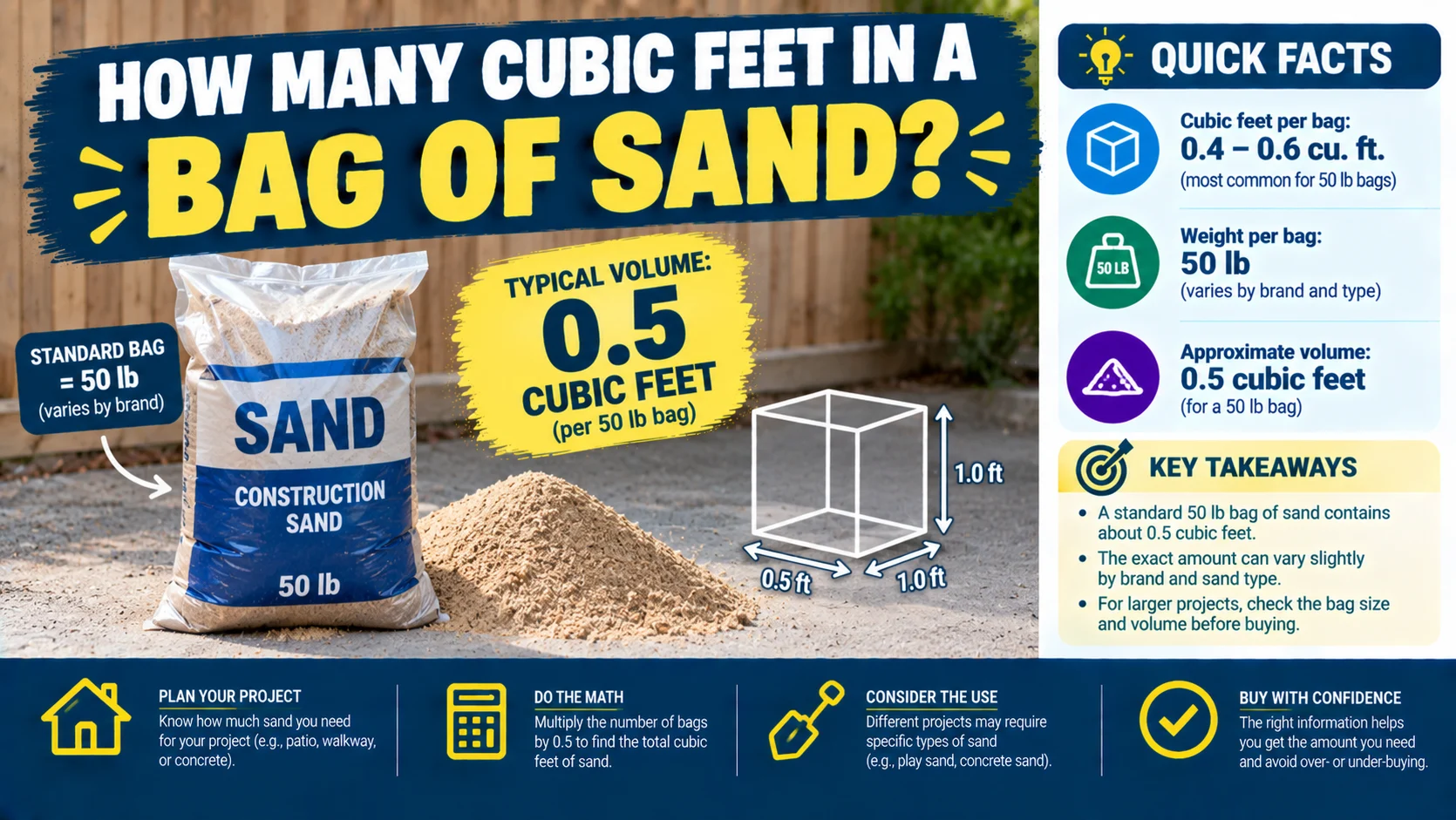
If you’re working on a landscaping, construction, or paving project, you may be wondering: how many cubic feet in a bag of sand?
The answer depends on:
- Bag weight
- Sand density
- Moisture content
However, there are standard estimates commonly used in construction and home improvement projects.
A typical 50-pound bag of sand contains about 0.5 cubic feet of sand.
Different bag sizes contain different volumes, which is important when calculating how much sand you need for:
- Pavers
- Playgrounds
- Concrete mixing
- Leveling projects
In this guide, you’ll learn the exact cubic foot conversions for common sand bags, plus practical estimating tips.
Quick Answer
Here are the most common sand bag sizes:
| Bag Weight | Approximate Cubic Feet |
|---|---|
| 40 lb bag | 0.4 cu ft |
| 50 lb bag | 0.5 cu ft |
| 60 lb bag | 0.6 cu ft |
| 70 lb bag | 0.7 cu ft |
| 80 lb bag | 0.8 cu ft |
Most Common Estimate:
50 lb bag of sand≈0.5 cubic feet
Understanding Sand Bag Sizes
Sand is usually sold by:
- Weight (pounds)
- Volume (cubic feet)
- Bulk cubic yards
Retail stores commonly sell:
- 40 lb
- 50 lb
- 60 lb bags
The weight-to-volume relationship depends on sand density.
Why Sand Volume Varies
Different types of sand have different densities.
Examples:
- Play sand
- Mason sand
- Concrete sand
- Paver base sand
Wet sand is also heavier than dry sand.
How Many Cubic Feet in Common Sand Bags?
40-Pound Bag
40 lbs≈0.4 cubic feet
Good for:
- Small leveling jobs
- Sandbox topping
50-Pound Bag
50 lbs≈0.5 cubic feet
Most common size sold at hardware stores.
60-Pound Bag
60 lbs≈0.6 cubic feet
80-Pound Bag
80 lbs≈0.8 cubic feet
Often used for:
- Construction
- Concrete work
Cubic Feet Conversion Formula
The standard conversion uses density:
Volume=DensityWeight
Typical dry sand density:
100 lbs per cubic foot (approx)
Example:
- 50 lb ÷ 100 = 0.5 cubic feet
Sand Bag Coverage Chart
| Project | Typical Sand Needed |
|---|---|
| Small sandbox | 10–15 bags |
| Patio pavers | 20–40 bags |
| Leveling under pool | 30–50 bags |
| Concrete mixing | Varies by project |
Real-World Landscaping Examples
Example 1: Patio Base
Area:
- 100 sq ft
- 1-inch sand layer
Calculation:
100×121=8.3 cubic feet
Using 50 lb bags:
8.3÷0.5≈17 bags
Example 2: Sandbox
Need:
- 5 cubic feet of sand
Using 50 lb bags:
5÷0.5=10 bags
Wet vs Dry Sand Weight Differences
Wet sand:
- Weighs more
- Occupies slightly less volume
Moisture increases density significantly.
This affects:
- Transportation
- Material calculations
- Coverage estimates
Common Mistakes When Estimating Sand
Ignoring Compaction
Packed sand occupies less volume.
Not Accounting for Waste
Always buy extra.
Confusing Weight and Volume
Pounds ≠ cubic feet directly.
Using Wet Sand Estimates for Dry Projects
Can lead to shortages.
Expert Tips for Buying Sand
Buy 10% Extra
Helpful for:
- Compaction
- Spillage
- Uneven surfaces
Verify Sand Type
Different projects need different sand.
Use Bulk Delivery for Large Projects
Cheaper than buying many bags.
Measure Depth Carefully
Small depth changes affect quantity greatly.
Why Understanding Cubic Feet Matters
Knowing how many cubic feet in a bag of sand helps you:
- Estimate project costs
- Avoid shortages
- Plan transportation
- Improve material efficiency
- Reduce waste
Bulk Sand Comparison
For larger jobs:
1 cubic yard=27 cubic feet
That means:
- About 54 fifty-pound bags equal 1 cubic yard
FAQs
1. How many cubic feet in a 50 lb bag of sand?
About 0.5 cubic feet.
2. How many bags equal 1 cubic yard?
Approximately 54 fifty-pound bags.
3. Does wet sand weigh more?
Yes, moisture increases weight.
4. How much sand do I need for pavers?
Depends on area and depth.
5. Is all sand the same density?
No, different sand types vary.
Conclusion
So, how many cubic feet in a bag of sand? The most common estimate is:
A 50-pound bag contains approximately 0.5 cubic feet of sand.
Smaller or larger bags adjust proportionally, with most sand averaging about 100 pounds per cubic foot.
Understanding these conversions helps you accurately estimate materials for landscaping, construction, and home improvement projects while saving time and money.