

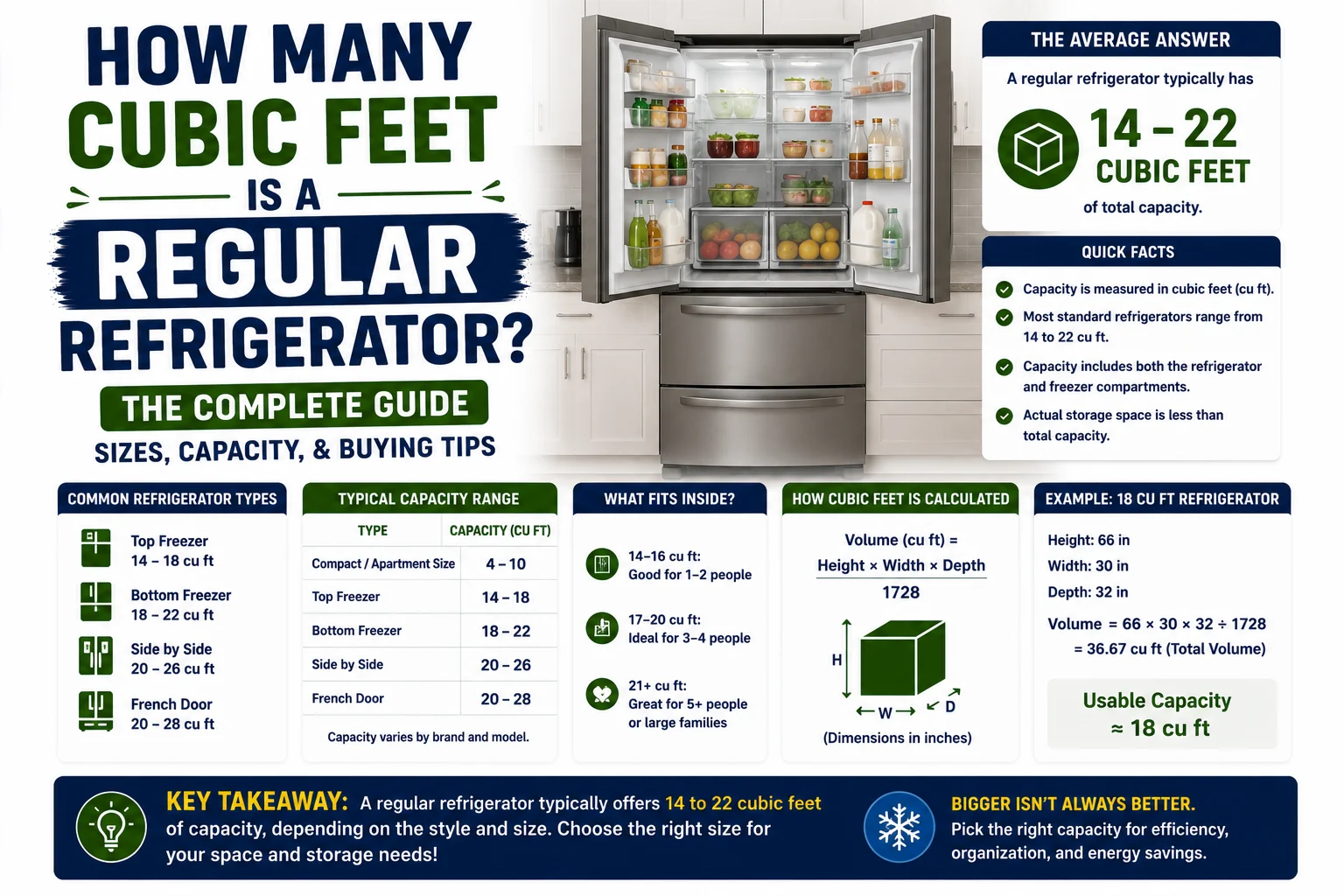
When shopping for a new refrigerator or trying to determine whether your current appliance offers enough storage space, one of the most important specifications to understand is cubic footage. Many consumers ask, “How many cubic feet is a regular refrigerator?”
The answer depends on the refrigerator’s style, design, and intended use. However, a typical household refrigerator generally offers between 18 and 25 cubic feet of storage space, with many standard family refrigerators falling around 20 to 22 cubic feet.
Understanding refrigerator capacity helps homeowners choose the right appliance for their household size, food storage habits, and kitchen layout. In this guide, we’ll explain refrigerator cubic feet, how capacity is measured, common refrigerator sizes, and what capacity is best for different families.
Quick Answer
A regular refrigerator typically contains:
18 to 25 cubic feet
The average family refrigerator often falls within:
20 to 22 cubic feet
This capacity usually provides enough food storage for a household of three to five people.
What Does Cubic Feet Mean in a Refrigerator?
Cubic feet measures the amount of interior storage space available inside a refrigerator.
Unlike square feet, which measure area, cubic feet measure volume.
The basic formula for volume is:
Length×Width×Height=Cubic Feet
Manufacturers calculate the usable storage area inside both the refrigerator and freezer compartments to determine total capacity.
Average Refrigerator Capacity by Type
Different refrigerator styles offer different storage capacities.
Top-Freezer Refrigerators
Top-freezer models are among the most common and affordable options.
Typical capacity:
14 to 22 cubic feet
These refrigerators feature:
- Refrigerator section on the bottom
- Freezer compartment on top
- Efficient use of space
Bottom-Freezer Refrigerators
Bottom-freezer refrigerators place frequently used refrigerated items at eye level.
Typical capacity:
18 to 25 cubic feet
Side-by-Side Refrigerators
These models feature vertical refrigerator and freezer compartments.
Typical capacity:
20 to 29 cubic feet
French Door Refrigerators
French door models have become increasingly popular due to their storage flexibility.
Typical capacity:
20 to 30 cubic feet
What Is Considered a Regular Refrigerator?
Most homeowners consider a refrigerator “regular-sized” when it falls between:
18 and 25 cubic feet
These refrigerators typically fit standard kitchen spaces and provide adequate storage for average families.
A capacity of approximately:
21 cubic feet
is often viewed as the sweet spot for balancing storage and efficiency.
Refrigerator Capacity and Household Size
Choosing the correct refrigerator size often depends on how many people live in your home.
One to Two People
Recommended capacity:
10 to 16 cubic feet
This size typically accommodates:
- Weekly groceries
- Fresh produce
- Frozen meals
Three to Four People
Recommended capacity:
18 to 24 cubic feet
This range covers the needs of most families.
Five or More People
Recommended capacity:
25 cubic feet or more
Larger families often require additional freezer space and food storage.
How Refrigerator Capacity Is Measured
Manufacturers determine refrigerator volume by measuring the usable interior compartments.
This includes:
- Fresh food storage areas
- Shelving space
- Crisper drawers
- Freezer compartments
The total usable volume is then expressed in cubic feet.
It’s important to note that exterior dimensions do not always reflect interior storage capacity.
Modern designs often maximize storage while maintaining standard exterior sizes.
Typical Refrigerator Dimensions
While capacities vary, many standard refrigerators share similar exterior dimensions.
Width
Most regular refrigerators measure:
30 to 36 inches
wide.
Height
Typical height ranges from:
66 to 70 inches
Depth
Most units measure approximately:
30 to 36 inches
deep.
How Much Food Fits in a 20-Cubic-Foot Refrigerator?
A 20-cubic-foot refrigerator can generally store:
- Weekly groceries for a family
- Fresh fruits and vegetables
- Dairy products
- Frozen foods
- Beverages
- Meal-prep containers
Many households find that a refrigerator within the 20-to-22-cubic-foot range provides an excellent balance between capacity and kitchen space.
Understanding Usable Storage Space
Not every cubic foot is equally usable.
Factors that affect actual storage include:
Shelf Design
Adjustable shelves increase storage flexibility.
Door Bins
Large door compartments create additional storage opportunities.
Ice Makers
Built-in ice makers reduce available freezer capacity.
Water Dispensers
Internal components may slightly reduce usable interior volume.
Compact Refrigerators vs Regular Refrigerators
Compact refrigerators are much smaller than standard models.
Typical compact refrigerator capacity:
1.7 to 6 cubic feet
These units are commonly used in:
- Dorm rooms
- Offices
- Bedrooms
- Recreation rooms
By comparison, a regular refrigerator may offer three to ten times more storage space.
Large Refrigerators and Oversized Models
Some refrigerators exceed standard household capacities.
Large-capacity models often provide:
25 to 30+ cubic feet
These appliances are ideal for:
- Large families
- Bulk grocery shoppers
- Entertainers
- Home chefs
Energy Efficiency and Refrigerator Size
Larger refrigerators generally consume more electricity.
However, modern appliances often feature:
- Energy-efficient compressors
- Improved insulation
- Smart cooling systems
When selecting a refrigerator, balancing capacity and efficiency can help reduce utility costs.
Tips for Choosing the Right Refrigerator Size
Consider Household Size
Choose capacity based on the number of people in your home.
Evaluate Shopping Habits
Bulk shoppers often need larger refrigerators.
Measure Your Kitchen
Always verify:
- Width
- Height
- Depth
- Door clearance
before purchasing.
Think About Future Needs
Families may grow, and food storage needs often change over time.
Common Mistakes When Buying a Refrigerator
Choosing Based Only on Exterior Size
Two refrigerators with identical dimensions may have different capacities.
Ignoring Door Swing Space
A refrigerator may fit physically but lack enough room for the doors to open fully.
Underestimating Food Storage Needs
Many homeowners regret purchasing a refrigerator that is too small.
Overbuying Capacity
Excessively large refrigerators may waste energy and kitchen space.
Benefits of a Standard-Sized Refrigerator
A regular refrigerator offers several advantages.
Balanced Capacity
Most households can comfortably store weekly groceries.
Easier Installation
Standard sizes fit most kitchen layouts.
Lower Purchase Cost
Regular models often cost less than oversized units.
Better Energy Efficiency
Many mid-sized refrigerators offer excellent energy performance.
FAQs
How many cubic feet is a regular refrigerator?
Most regular refrigerators range between:
18 and 25 cubic feet
What is the average refrigerator size for a family?
Most families use refrigerators with capacities around:
20 to 22 cubic feet
Is 20 cubic feet enough for a family of four?
Yes. A 20-cubic-foot refrigerator is generally suitable for a family of four.
How many cubic feet should a single person have?
Many individuals do well with:
10 to 16 cubic feet
What is considered a large refrigerator?
Most refrigerators exceeding:
25 cubic feet
are considered large-capacity models.
Conclusion
So, how many cubic feet is a regular refrigerator? In most households, a standard refrigerator offers between:
18 and 25 cubic feet
with the average family refrigerator providing approximately:
20 to 22 cubic feet
of storage space.
Understanding refrigerator capacity is essential when comparing models, planning kitchen upgrades, and ensuring you have enough room for groceries and meal preparation. Whether you’re shopping for a compact apartment refrigerator or a large family appliance, knowing how cubic feet relate to storage needs can help you make the best choice for your home.