
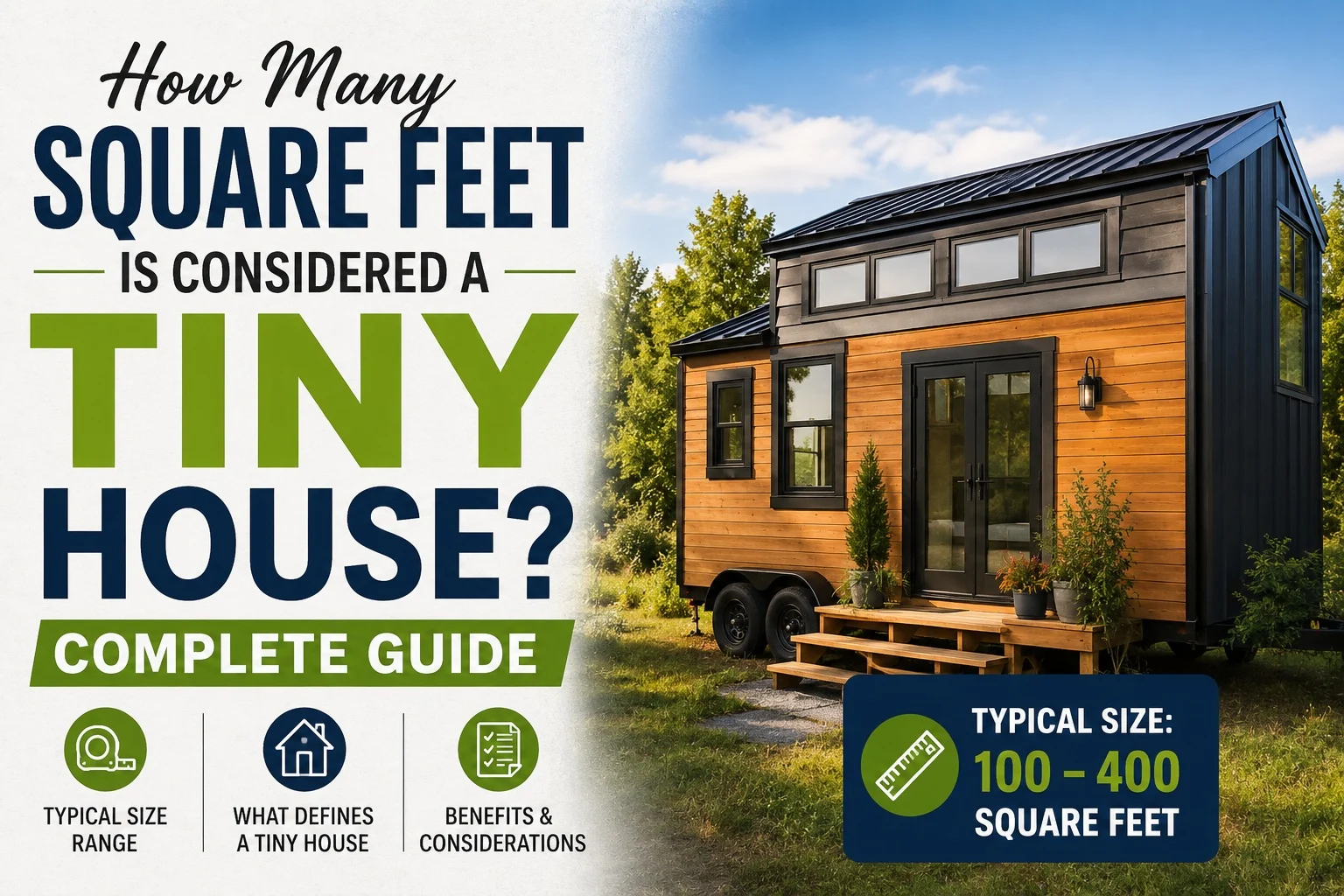
If you are exploring minimalist living or alternative housing, you may be wondering: how many square feet is considered a tiny house?
The simple answer is:
A tiny house is typically defined as a home under 400 to 600 square feet.
Some definitions are stricter, especially in zoning laws, while others allow slightly larger spaces depending on design and mobility.
In this guide, you’ll learn exactly what qualifies as a tiny house, different size categories, and what living in one actually feels like.
Quick Answer
The standard size range for a tiny house is:
100 to 600 square feet
Breakdown:
- Micro tiny homes: 100–200 sq ft
- Small tiny homes: 200–400 sq ft
- Large tiny homes: 400–600 sq ft
What Is a Tiny House?
A tiny house is a compact living space designed to maximize efficiency and minimize unnecessary space.
Key features:
- Small footprint
- Efficient layout
- Multi-purpose furniture
- Minimalist design
Types of tiny homes:
- Tiny houses on wheels (THOW)
- Foundation-based tiny homes
- Converted sheds or cabins
- Modular micro homes
How Many Square Feet Is Considered a Tiny House?
There is no universal rule, but most definitions fall within this range:
Small Tiny Houses
- 100–200 square feet
- Extremely compact
- Often mobile or RV-like
Used for:
- Solo living
- Temporary housing
- Off-grid lifestyles
Standard Tiny Houses
- 200–400 square feet
- Most common definition
- Includes kitchen, bathroom, and sleeping loft
300 \text{ square feet (average tiny house size)
Large Tiny Houses
- 400–600 square feet
- More comfortable layouts
- Often mistaken for small houses
Used for:
- Couples
- Long-term living
- Families with one child
Tiny House Size Chart
| Category | Square Feet | Description |
|---|---|---|
| Micro tiny | 100–200 sq ft | Ultra compact living |
| Standard tiny | 200–400 sq ft | Most common type |
| Large tiny | 400–600 sq ft | Spacious tiny homes |
Tiny House vs Small House
| Feature | Tiny House | Small House |
|---|---|---|
| Size | Under 600 sq ft | 600–1,200 sq ft |
| Lifestyle | Minimalist | Traditional |
| Storage | Limited | Moderate |
| Cost | Very low | Moderate |
What Fits in a Tiny House?
Despite limited space, tiny homes are highly functional.
Typical layout includes:
- Sleeping loft or small bedroom
- Compact kitchen
- Bathroom (shower/toilet combo)
- Small living area
Furniture examples:
- Foldable beds
- Built-in storage
- Convertible dining tables
- Wall-mounted shelving
Benefits of Tiny House Living
1. Lower Cost
- Cheaper than traditional homes
- Lower utility bills
2. Minimal Maintenance
- Less cleaning required
- Fewer repairs
3. Sustainable Living
- Smaller environmental footprint
- Energy efficient
4. Mobility (for some models)
- Can be relocated easily
Challenges of Tiny Homes
Limited Space
- Storage is very restricted
Zoning Restrictions
- Not all areas allow tiny homes
Lifestyle Adjustment
- Requires strong organization habits
Privacy Issues
- Limited personal space
Expert Tips Before Moving Into a Tiny House
- Declutter before moving in
- Choose multi-functional furniture
- Use vertical storage solutions
- Plan layout carefully
- Test small living before committing
Pro Tip:
If you feel comfortable in a 200–300 sq ft space, you may adapt well to tiny living.
Why Tiny House Size Matters
Understanding how many square feet is considered a tiny house helps you:
- Choose the right lifestyle
- Understand legal definitions
- Compare housing costs
- Plan storage efficiently
- Decide if minimalist living suits you
5 FAQs
1. How many square feet is a tiny house?
Typically 100 to 600 square feet.
2. What is the most common tiny house size?
Around 200 to 400 square feet.
3. Is 700 square feet still a tiny house?
No, it is usually considered a small house.
4. Can a family live in a tiny house?
Yes, but usually only in larger tiny homes (400–600 sq ft).
5. What is the smallest tiny house size?
Around 100 square feet or less.
Conclusion
So, how many square feet is considered a tiny house? The standard range is 100 to 600 square feet, depending on design and lifestyle.
Tiny homes offer a minimalist, affordable, and efficient way of living, but they also require careful planning and lifestyle adjustment.
Understanding tiny house sizing helps you decide whether this compact living style fits your needs and long-term goals.