

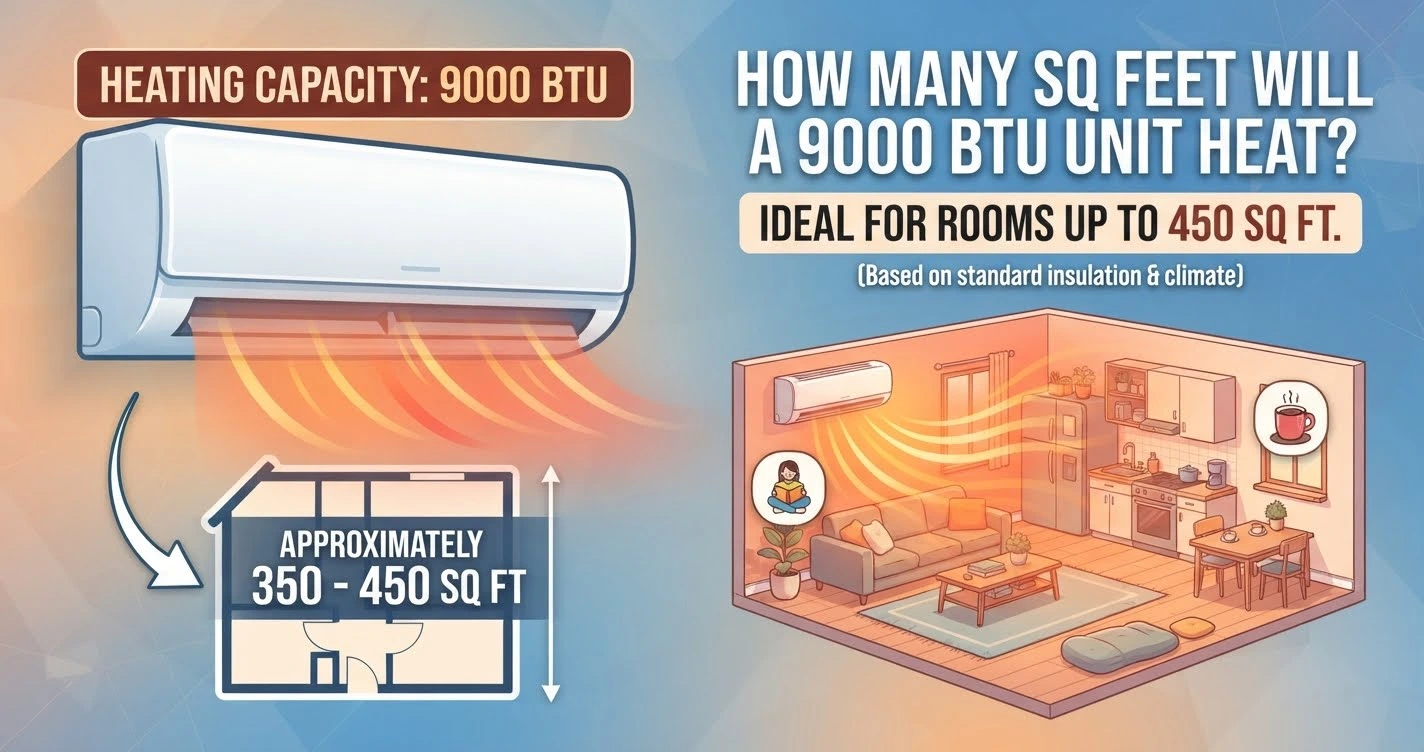
If you are shopping for an air conditioner or heater, you may be wondering: how many square feet will 9000 BTU heat?
The simple answer is:
A 9000 BTU unit typically heats or cools about 250 to 400 square feet.
However, this range is not fixed. The actual performance depends on insulation, climate, ceiling height, and room layout.
In this guide, you’ll learn exactly how BTU works, how much space a 9000 BTU unit covers, and how to choose the right size for your room.
Quick Answer
The average coverage of a 9000 BTU unit is:
250 to 400 square feet
Breakdown:
- Poor insulation: 200–250 sq ft
- Average room: 250–350 sq ft
- Well-insulated space: 350–400 sq ft
What Is a BTU?
BTU stands for British Thermal Unit.
It measures how much heat energy an air conditioner or heater can add or remove from a space.
In simple terms:
- Higher BTU = more heating/cooling power
- Lower BTU = smaller room coverage
How Many Square Feet Will 9000 BTU Heat?
A general HVAC rule of thumb is:
20 \text{ BTU per square foot (average estimation rule)
So:
9000 \div 20 = 450 \text{ sq ft (ideal conditions)
However, real-world usage is lower due to heat loss and inefficiencies.
Realistic range:
250 to 400 square feet
BTU to Square Feet Chart
| BTU Size | Coverage Area |
|---|---|
| 5,000 BTU | 100–150 sq ft |
| 7,000 BTU | 200–300 sq ft |
| 9,000 BTU | 250–400 sq ft |
| 12,000 BTU | 350–550 sq ft |
| 18,000 BTU | 600–1,000 sq ft |
Factors That Affect Heating Capacity
1. Insulation Quality
- Poor insulation = less coverage
- Good insulation = more efficient heating
2. Climate
- Hot climates require more cooling power
- Cold climates reduce heating efficiency
3. Ceiling Height
Higher ceilings mean more air volume to heat.
4. Windows and Sunlight
- Large windows increase heat loss
- Sun-facing rooms may need less BTU
5. Room Layout
Open floor plans require more power than closed rooms.
Best Room Sizes for 9000 BTU Units
Bedrooms
- 120–300 sq ft
- Ideal for most standard bedrooms
Home Offices
- 150–350 sq ft
- Efficient for small workspaces
Studio Apartments
- Small studios under 400 sq ft
- Works well if insulation is good
Common Mistakes When Choosing BTU Size
Choosing too small
Room won’t heat or cool properly.
Choosing too large
- Wastes energy
- Causes uneven temperature control
Ignoring insulation
Many buyers forget this is a major factor.
Not measuring room size correctly
Always calculate square footage before buying.
Expert HVAC Tips
- Always add 10–20% extra BTU for sunny rooms
- Reduce BTU needs for shaded or basement rooms
- Use fans to improve air circulation
- Seal windows and doors for efficiency
Pro Tip:
A slightly higher BTU unit is better than undersizing.
Why BTU Sizing Matters
Understanding how many square feet will 9000 BTU heat helps you:
- Choose the right HVAC system
- Save electricity costs
- Improve comfort levels
- Avoid equipment strain
- Extend appliance lifespan
Correct sizing is one of the most important parts of HVAC efficiency.
5 FAQs
1. How many square feet will 9000 BTU heat?
About 250 to 400 square feet.
2. Is 9000 BTU enough for a bedroom?
Yes, for most medium-sized bedrooms.
3. What room size is best for 9000 BTU?
Around 300 square feet average.
4. Can 9000 BTU cool a living room?
Only small living rooms under 400 sq ft.
5. What happens if BTU is too low?
The unit will struggle and run continuously.
Conclusion
So, how many square feet will 9000 BTU heat? The typical range is 250 to 400 square feet, depending on insulation, climate, and room design.
A 9000 BTU unit is ideal for bedrooms, small offices, and compact living spaces where efficiency and comfort matter.
Choosing the right BTU size ensures better performance, lower energy bills, and consistent temperature control in your home.


Pingback: How Many Feet Are 36 Inches? Complete Conversion Guide