
If you are planning a landscaping, gardening, or grass seeding project, one of the first questions you may ask is: how many square feet will a bale of straw cover?
The answer depends on several factors, including the size of the bale, how thick you spread the straw, and the purpose of the coverage. In general, one standard bale of straw covers between 200 and 500 square feet. Thin applications cover more area, while thicker mulch layers cover less.
Understanding straw coverage helps you avoid buying too much or too little material. Whether you are protecting new grass seed, mulching a vegetable garden, or controlling soil erosion, this guide explains everything you need to know about straw bale coverage.
Understanding Straw Bale Coverage
Straw is commonly used as mulch because it is affordable, lightweight, and easy to spread. However, coverage is not always exact because every bale is slightly different.
Several things affect how many square feet a bale will cover:
- Bale size
- Straw density
- Moisture level
- Application thickness
- Straw type
- Compression during packaging
A tightly packed bale may expand more once opened. Loose straw spreads faster but may not provide thick coverage.
For most home projects, using average coverage estimates works well.
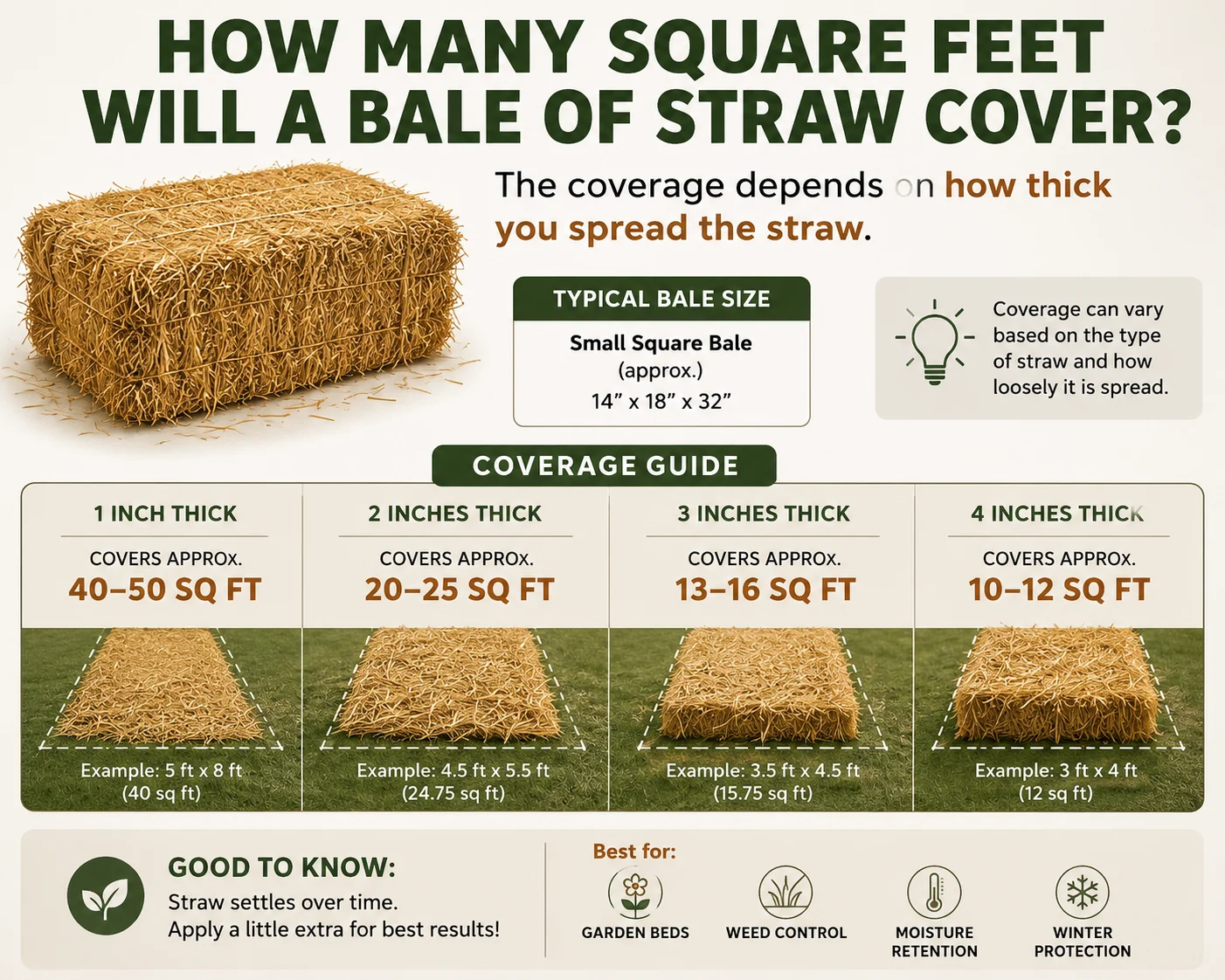
Average Coverage of a Bale of Straw
A standard two-string straw bale usually measures about:
- 36 inches long
- 18 inches wide
- 14 inches high
These bales typically weigh between 40 and 60 pounds.
Here is the average straw coverage based on depth:
| Straw Depth | Approximate Coverage Per Bale |
|---|---|
| 1 inch | 400–500 square feet |
| 2 inches | 200–250 square feet |
| 3 inches | 130–170 square feet |
A thinner layer is common for grass seed protection. Thicker layers work better for garden mulch and weed suppression.
Straw Bale Coverage Chart
Using a straw coverage chart makes planning much easier.
Coverage at 1 Inch Depth
A 1-inch layer is ideal for:
- Newly seeded lawns
- Temporary soil protection
- Light mulch applications
Coverage estimate:
| Number of Bales | Coverage Area |
|---|---|
| 1 bale | 400–500 sq ft |
| 2 bales | 800–1,000 sq ft |
| 5 bales | 2,000–2,500 sq ft |
This thin layer allows sunlight and water to reach the soil while reducing erosion.
Coverage at 2 Inch Depth
A 2-inch layer is commonly used for gardens and landscaping.
Coverage estimate:
| Number of Bales | Coverage Area |
|---|---|
| 1 bale | 200–250 sq ft |
| 2 bales | 400–500 sq ft |
| 5 bales | 1,000–1,250 sq ft |
This depth helps keep moisture in the soil and reduces weed growth.
Coverage at 3 Inch Depth
A 3-inch mulch layer offers strong weed suppression and insulation.
Coverage estimate:
| Number of Bales | Coverage Area |
|---|---|
| 1 bale | 130–170 sq ft |
| 2 bales | 260–340 sq ft |
| 5 bales | 650–850 sq ft |
Thicker layers work best around shrubs, pathways, and erosion-prone areas.
How to Calculate Straw Coverage
Calculating straw coverage is simple when you follow a few steps.
Measure Your Area
First, measure the length and width of the area.
Use this formula:
Square Feet=Length×Width
For example:
- Garden length = 20 feet
- Garden width = 10 feet
Calculation:
20×10=200 square feet
Your area equals 200 square feet.
Choose Straw Depth
Next, decide how thick the straw layer should be.
Recommended depths:
| Use | Recommended Depth |
|---|---|
| Grass seed | 1 inch |
| Vegetable gardens | 2 inches |
| Weed control | 3 inches |
| Erosion control | 2–4 inches |
Estimate Number of Bales Needed
Now divide the total area by the bale coverage.
Example:
- Area = 600 square feet
- Coverage per bale = 200 square feet
Calculation:
600÷200=3
You need approximately 3 bales.
Always buy a little extra for uneven spreading or waste.
Best Uses for Straw Mulch
Straw is extremely versatile and works in many outdoor projects.
Garden Beds
Gardeners often use straw mulch around vegetables and flowers because it:
- Retains soil moisture
- Reduces weeds
- Keeps soil cooler
- Prevents mud splashing on plants
Straw is especially popular for:
- Tomatoes
- Strawberries
- Peppers
- Cucumbers
Grass Seeding
Fresh grass seed can wash away during rain or dry out in sunlight.
A thin straw layer helps by:
- Holding moisture
- Preventing erosion
- Protecting seeds from birds
- Reducing runoff
Do not spread straw too thick over grass seed. Excess straw blocks sunlight and slows germination.
Erosion Control
Straw is widely used on slopes, construction sites, and bare soil areas.
Benefits include:
- Slowing water runoff
- Stabilizing soil
- Reducing sediment movement
- Improving moisture retention
Some projects use straw blankets or straw wattles for extra protection.
Animal Bedding
Farmers also use straw for livestock bedding because it provides insulation and comfort.
Common animals include:
- Horses
- Chickens
- Goats
- Cows
In bedding applications, square footage coverage varies greatly because straw is piled more deeply.
Factors That Affect Straw Coverage
Even though charts are helpful, real-world coverage often changes.
Here are the biggest factors.
Bale Density
Some bales are tightly compressed while others are loose.
Dense bales expand more after opening and usually cover larger areas.
Moisture Content
Wet straw weighs more and may not fluff up properly.
Dry straw spreads more evenly and covers better.
Straw Type
Different crops produce different straw textures.
Common types include:
- Wheat straw
- Oat straw
- Barley straw
- Rice straw
Wheat straw is the most common landscaping choice.
Application Style
Some people spread straw lightly while others pack it down heavily.
Loose spreading increases square footage but offers thinner protection.
Compact spreading provides better insulation but covers less ground.
Straw vs Hay Coverage
Many people confuse straw and hay, but they are very different materials.
| Straw | Hay |
|---|---|
| Dry stalks after harvest | Dried grass or legumes |
| Mostly seed-free | Contains seeds |
| Best for mulch | Best for animal feed |
| Lower weed risk | Higher weed risk |
Straw is the better option for gardens because hay often introduces weeds.
Coverage amounts may look similar, but hay tends to compact more quickly.
Common Mistakes When Using Straw
Avoiding common mistakes can save money and improve results.
Using Too Much Straw
Over-mulching prevents airflow and sunlight from reaching soil.
This can:
- Slow seed germination
- Cause mold
- Trap excessive moisture
Always follow recommended depths.
Using Hay Instead of Straw
Hay contains seeds that may sprout weeds throughout your garden.
Check labels carefully before buying.
Uneven Spreading
Piles of straw create inconsistent moisture and coverage.
Spread straw evenly for best results.
Ignoring Wind Conditions
Straw blows easily on windy days.
Lightly water the straw after spreading to help it stay in place.
Expert Tips for Better Coverage
Professionals use a few simple tricks to maximize straw efficiency.
Fluff the Straw First
Compressed straw expands significantly once separated.
Breaking apart flakes increases coverage.
Store Bales Properly
Keep straw dry before use.
Wet straw may mold and lose effectiveness.
Store bales:
- Off the ground
- Under cover
- Away from rain
Apply the Right Thickness
More is not always better.
Use lighter coverage for grass seed and thicker layers for weed control.
Buy Extra for Large Projects
Coverage estimates are averages.
Buying 10–15% extra helps prevent shortages.
Real World Straw Coverage Examples
Here are a few practical examples.
| Project | Area | Recommended Depth | Estimated Bales |
|---|---|---|---|
| Small vegetable garden | 200 sq ft | 2 inches | 1 bale |
| New lawn seeding | 1,000 sq ft | 1 inch | 2–3 bales |
| Large flower bed | 500 sq ft | 3 inches | 3–4 bales |
| Erosion control slope | 2,000 sq ft | 2 inches | 8–10 bales |
These estimates vary depending on bale size and spreading method.
Environmental Benefits of Straw Mulch
Straw mulch also supports sustainable gardening practices.
Benefits include:
- Reduced water evaporation
- Lower soil erosion
- Improved soil structure
- Reduced weed growth without chemicals
- Better temperature control for plants
As straw decomposes, it adds organic matter to the soil.
This improves long-term soil health.
FAQs
How many square feet does one bale of straw cover?
One standard bale of straw typically covers between 200 and 500 square feet depending on mulch depth.
How thick should straw mulch be?
Most garden projects use 2 inches of straw mulch. Grass seed usually needs only 1 inch.
Is straw better than hay for mulch?
Yes. Straw contains fewer seeds and reduces the chance of weed growth.
How many straw bales do I need for 1,000 square feet?
For light coverage, you may need 2–3 bales. For thicker mulch, you may need 5 or more.
Does wet straw cover less area?
Yes. Wet straw compresses and does not spread as efficiently as dry straw.
Conclusion
So, how many square feet will a bale of straw cover? In most cases, one bale covers between 200 and 500 square feet, depending on how deeply you spread it.
Thin layers work best for grass seed, while thicker applications provide stronger weed control and moisture retention in gardens. Understanding straw coverage helps you budget accurately and complete your project more efficiently.
Before buying straw, measure your area carefully, choose the correct mulch depth, and account for a little extra material. Whether you are protecting new seed, improving garden soil, or controlling erosion, straw remains one of the most affordable and practical mulch options available.
Discover More Articles
How Many Cubic Feet Is a King Size Mattress?