

Shipping containers are used worldwide for storage, transportation, moving, and even construction projects. One of the most common questions people ask before renting or purchasing one is:
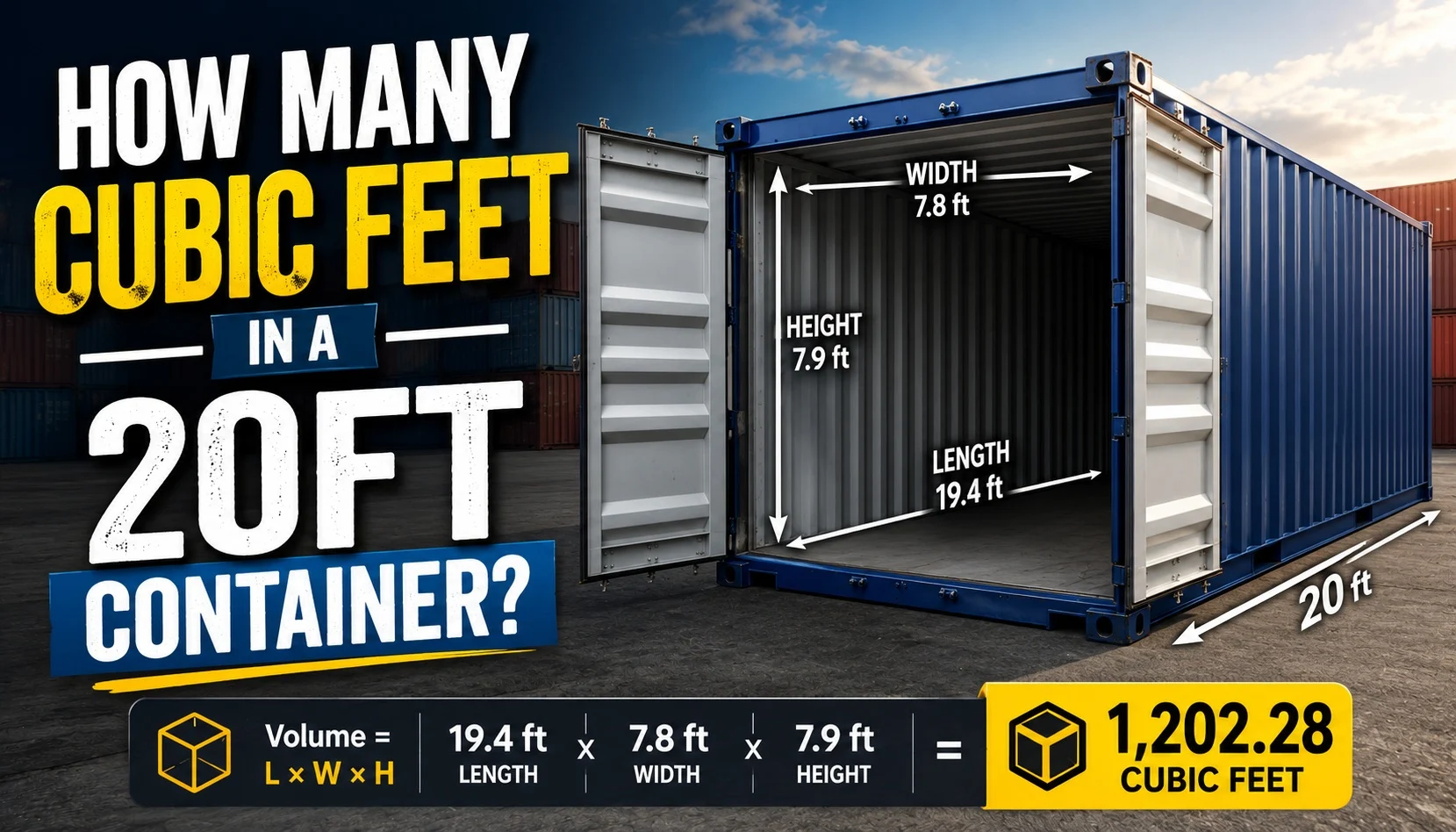
How many cubic feet are in a 20ft container?
Understanding container volume is important for:
- Shipping goods internationally
- Estimating storage capacity
- Planning moves
- Calculating freight costs
- Organizing warehouse logistics
A standard 20-foot shipping container offers a large amount of storage space while remaining compact enough for easy transport and placement.
Quick Answer
A standard 20-foot shipping container typically holds:
≈1,170 cubic feet
Final Answer:
A standard 20ft container has approximately 1,170 cubic feet of usable interior space.
What Is a 20ft Shipping Container?
A 20ft container is one of the most commonly used intermodal containers in global shipping.
It is designed to:
- Fit on ships, trains, and trucks
- Protect cargo from weather
- Maximize transport efficiency
These containers are widely used for:
- Household moving
- Commercial storage
- International freight
- Construction site storage
- Portable offices
Standard 20ft Container Dimensions
Although called a “20ft container,” the actual interior dimensions are slightly smaller due to wall thickness.
Typical interior dimensions:
| Measurement | Size |
|---|---|
| Interior Length | ~19.4 ft |
| Interior Width | ~7.7 ft |
| Interior Height | ~7.9 ft |
These measurements can vary slightly depending on manufacturer and container type.
Calculating Cubic Feet
To calculate cubic feet:
Length×Width×Height
Using average dimensions:
19.4×7.7×7.9≈1,180 cubic feet
After accounting for structural components and practical loading limitations:
Most companies list usable capacity at approximately 1,170 cubic feet.
Cubic Feet vs Cubic Meters
Container capacity is often measured in both:
- Cubic feet
- Cubic meters
Conversion formula:
1 cubic meter=35.3 cubic feet
A standard 20ft container usually provides:
≈33 cubic meters
Which equals roughly:
33×35.3≈1,165 cubic feet
How Much Can Fit Inside a 20ft Container?
A 20ft container can hold:
- Furniture from a 2–3 bedroom home
- About 10 standard pallets
- Thousands of retail items
- Construction materials
- Industrial equipment
Typical moving capacity:
- 150–200 medium moving boxes
Weight Capacity Matters Too
Volume is not the only limitation.
20ft containers also have maximum payload limits.
Typical specifications:
| Category | Approximate Weight |
|---|---|
| Empty container weight | 4,800–5,000 lbs |
| Maximum cargo weight | 55,000 lbs |
| Gross maximum weight | 60,000+ lbs |
Heavy cargo may “max out” weight before filling all cubic feet.
Standard vs High Cube Containers
A standard 20ft container differs from a high cube container.
Standard 20ft Container
- Height: ~8.5 ft exterior
- Capacity: ~1,170 cubic feet
20ft High Cube Container
- Taller interior height
- More storage volume
High cube containers can provide:
≈1,320 cubic feet
Real-World Storage Examples
Example 1: Household Move
A 20ft container may fit:
- Beds
- Sofas
- Appliances
- Dining tables
- Boxes
Usually suitable for:
2–3 bedroom homes
Example 2: Business Storage
Retailers often store:
- Seasonal inventory
- Equipment
- Packaging supplies
Example 3: Construction Site
Contractors use containers for:
- Tool storage
- Materials
- Portable workshops
Why Cubic Feet Matters
Understanding cubic feet helps:
- Avoid overpacking
- Estimate shipping costs
- Compare container sizes
- Plan storage efficiently
Freight pricing often depends on:
- Volume
- Weight
- Destination
Comparing 20ft vs 40ft Containers
| Container Type | Cubic Feet |
|---|---|
| 20ft container | ~1,170 cu ft |
| 40ft container | ~2,390 cu ft |
| 40ft high cube | ~2,690 cu ft |
A 40ft container provides roughly double the storage volume.
Common Mistakes When Estimating Capacity
❌ Ignoring unusable space
Walls, doors, and cargo arrangement reduce practical storage.
❌ Overestimating stackability
Not all items can be safely stacked.
❌ Forgetting weight restrictions
Heavy items may exceed legal limits before filling space.
Tips for Maximizing Container Space
Use uniform boxes
Makes stacking easier.
Load heavy items first
Distributes weight evenly.
Use vertical space
Stack lighter items higher.
Leave access paths if needed
Especially for long-term storage.
Container Dimensions in Inches
For detailed planning:
| Dimension | Approximate Inches |
|---|---|
| Length | 233 in |
| Width | 92 in |
| Height | 94 in |
This helps when measuring:
- Furniture
- Machinery
- Pallets
International Shipping Uses
20ft containers dominate global trade because they:
- Fit standard transport systems
- Are cost efficient
- Work for many cargo types
Industries using them include:
- Manufacturing
- Agriculture
- Retail
- Automotive
- Construction
Storage Container Alternatives
Other common options include:
10ft container
- Small storage needs
40ft container
- Large moves or industrial storage
High cube container
- Extra vertical clearance
FAQs
How many cubic feet are in a standard 20ft container?
Approximately 1,170 cubic feet.
How many cubic meters is a 20ft container?
About 33 cubic meters.
Can a car fit in a 20ft container?
Yes, most standard passenger vehicles fit.
How many pallets fit in a 20ft container?
Usually around 10 standard pallets.
What is the maximum weight for a 20ft container?
Typically around 55,000 pounds of cargo.
Is a 20ft container enough for a house move?
Usually yes for a 2–3 bedroom home.
Conclusion
So, how many cubic feet are in a 20ft container?
The answer is:
A standard 20ft shipping container holds approximately 1,170 cubic feet of usable space.
This makes it one of the most versatile and widely used storage and shipping solutions in the world. Whether you’re moving household goods, transporting cargo, or planning storage, understanding container capacity helps ensure efficient planning and cost management.