

If you are planning a small painting project, you may be wondering: how many square feet does a quart of paint cover?
The quick answer is:
One quart of paint typically covers about 90 to 100 square feet.
However, the exact coverage depends on the type of surface, paint quality, application method, and how many coats you apply.
A quart is commonly used for small projects such as trim, doors, furniture, and touch-ups rather than full rooms. In this complete guide, you’ll learn how paint coverage works, what affects it, and how to calculate exactly how much paint you need for your project.
Quick Answer
The average coverage for a quart of paint is:
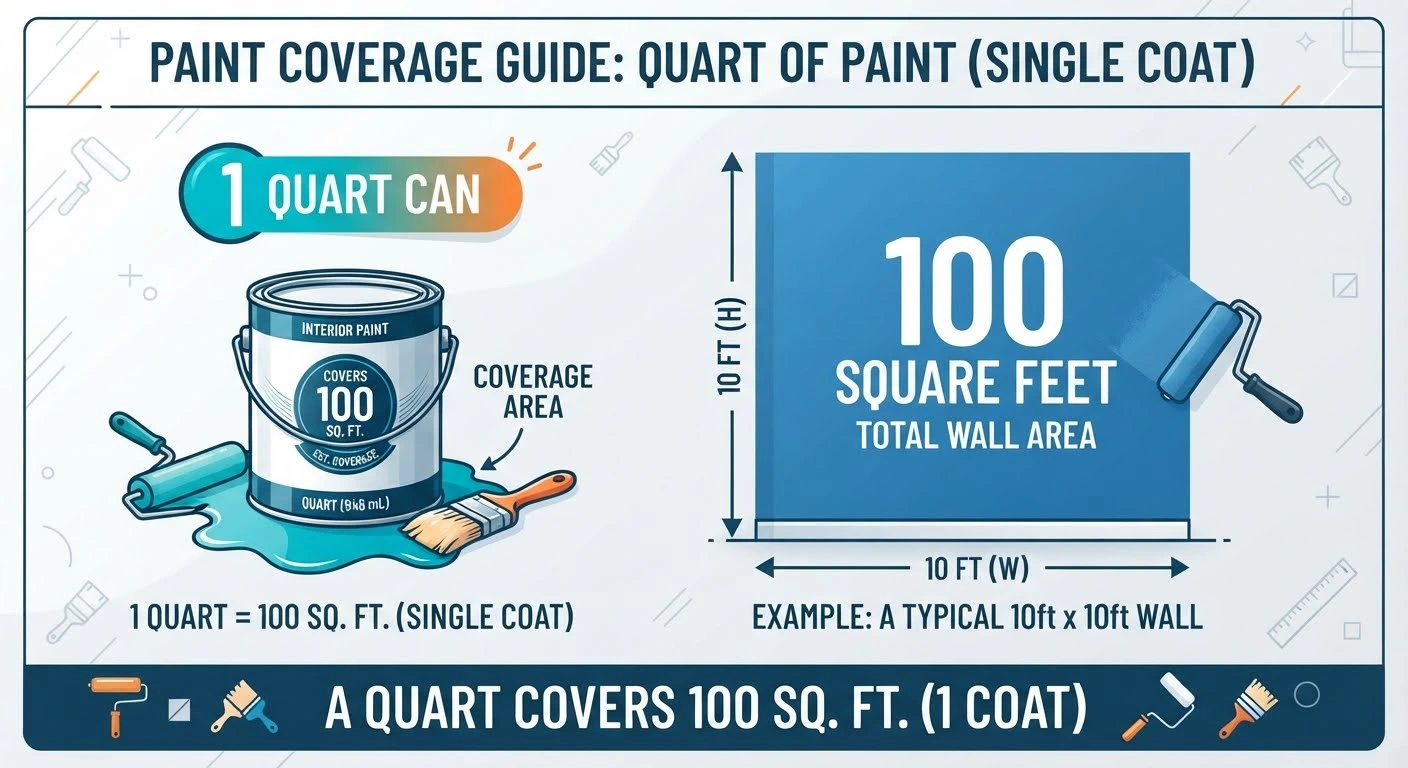
1 quart = approximately 100 square feet (one coat)
1 quart of paint≈100 square feet
But in real-world conditions, most people should expect:
- 90–100 sq ft for smooth surfaces
- 70–90 sq ft for porous surfaces
- 60–80 sq ft for textured walls
This is why professional painters always adjust estimates based on surface condition.
Standard Paint Coverage per Quart
Most paint manufacturers provide a standard estimate:
- 1 quart = 90–100 square feet (one coat)
- 1 gallon = 350–400 square feet
This assumes:
- Smooth drywall surface
- No primer required
- Average roller application
Why This Matters
Paint coverage is not fixed. It changes based on how the paint interacts with the surface.
How Many Square Feet Does a Quart of Paint Cover?
To understand how many square feet does a quart of paint cover, think of it in terms of area and application thickness.
Basic Formula
Coverage≈100 square feet per quart
Real Example
If you have a small wall that measures:
- 10 ft × 10 ft = 100 sq ft
10×10=100 square feet
Then one quart of paint will roughly cover that wall for one coat.
If you need two coats:
100×2=200 square feet of paint needed
So you would need two quarts or one gallon depending on efficiency.
Paint Coverage Chart
| Paint Amount | Coverage (One Coat) |
|---|---|
| 1 quart | 90–100 sq ft |
| 1 gallon | 350–400 sq ft |
| 5 gallons | 1,750–2,000 sq ft |
This chart helps estimate paint needs quickly for small and large projects.
Factors That Affect Paint Coverage
Several factors influence how far a quart of paint will go.
1. Surface Type
Different surfaces absorb paint differently:
- Drywall: best coverage
- Wood: moderate absorption
- Brick or concrete: high absorption
2. Color Change
Switching from:
- Dark → light colors requires more coats
- Light → dark usually covers faster
3. Application Method
- Roller: efficient coverage
- Brush: slightly less coverage
- Spray: varies depending on technique
4. Paint Quality
Higher-quality paints often:
- Cover more evenly
- Require fewer coats
- Provide better color saturation
What You Can Paint with One Quart
A quart of paint is ideal for small to medium projects.
Common Uses
- One small accent wall
- Interior doors (1–2 doors)
- Window trim and baseboards
- Furniture pieces
- Small bathroom walls
Example Projects
A typical quart can cover:
- A 10×10 accent wall
- Several chairs or cabinets
- Touch-ups across multiple rooms
How to Calculate Paint Needed
Step 1: Measure Area
Multiply:
Length×Height=Square Feet
Step 2: Subtract Windows and Doors
Remove non-painted areas for accuracy.
Step 3: Divide by Coverage
Square Feet÷100=Quarts Needed
Step 4: Multiply for Coats
Always multiply by number of coats needed.
Common Mistakes When Estimating Paint
Ignoring Surface Texture
Rough surfaces need more paint.
Forgetting Primer
Primer affects how much paint is absorbed.
Not Accounting for Coats
One coat is rarely enough for full coverage.
Overestimating Efficiency
Assuming perfect coverage leads to shortages.
Expert Tips for Better Coverage
- Always stir paint thoroughly
- Use high-quality rollers
- Apply thin, even coats
- Prime dark or porous surfaces first
- Buy slightly more than calculated
Pro painters typically add 10–15% extra paint to avoid running short.
Why Paint Coverage Matters
Understanding paint coverage helps you:
- Avoid overbuying paint
- Reduce waste
- Stay within budget
- Complete projects efficiently
- Achieve consistent color results
Even a small quart estimate can make a big difference in project planning.
5 FAQs
1. How many square feet does a quart of paint cover?
A quart of paint covers about 90–100 square feet per coat.
2. How many coats can I get from one quart?
Usually one coat on a 10×10 area, or multiple coats on smaller surfaces.
3. Does surface type affect coverage?
Yes. Rough or porous surfaces use more paint.
4. How much does a gallon of paint cover?
A gallon covers about 350–400 square feet.
5. Is one quart enough for a door?
Yes, typically one quart is enough for 1–2 interior doors with two coats.
10. Conclusion
So, how many square feet does a quart of paint cover? The general rule is about 90 to 100 square feet per coat.
However, real coverage depends on surface type, paint quality, and application method. Smooth walls may stretch a quart further, while textured or porous surfaces will require more paint.
If you’re planning a small painting project, a quart is usually perfect for trim, doors, furniture, or a small accent wall. Understanding coverage ensures you buy the right amount of paint, avoid waste, and achieve a professional-looking finish every time.


Pingback: How Many Rolls of Insulation for 400 Square Feet?