
If you are planning an epoxy flooring project, one of the first questions you will probably ask is: how many square feet does a gallon of epoxy cover?
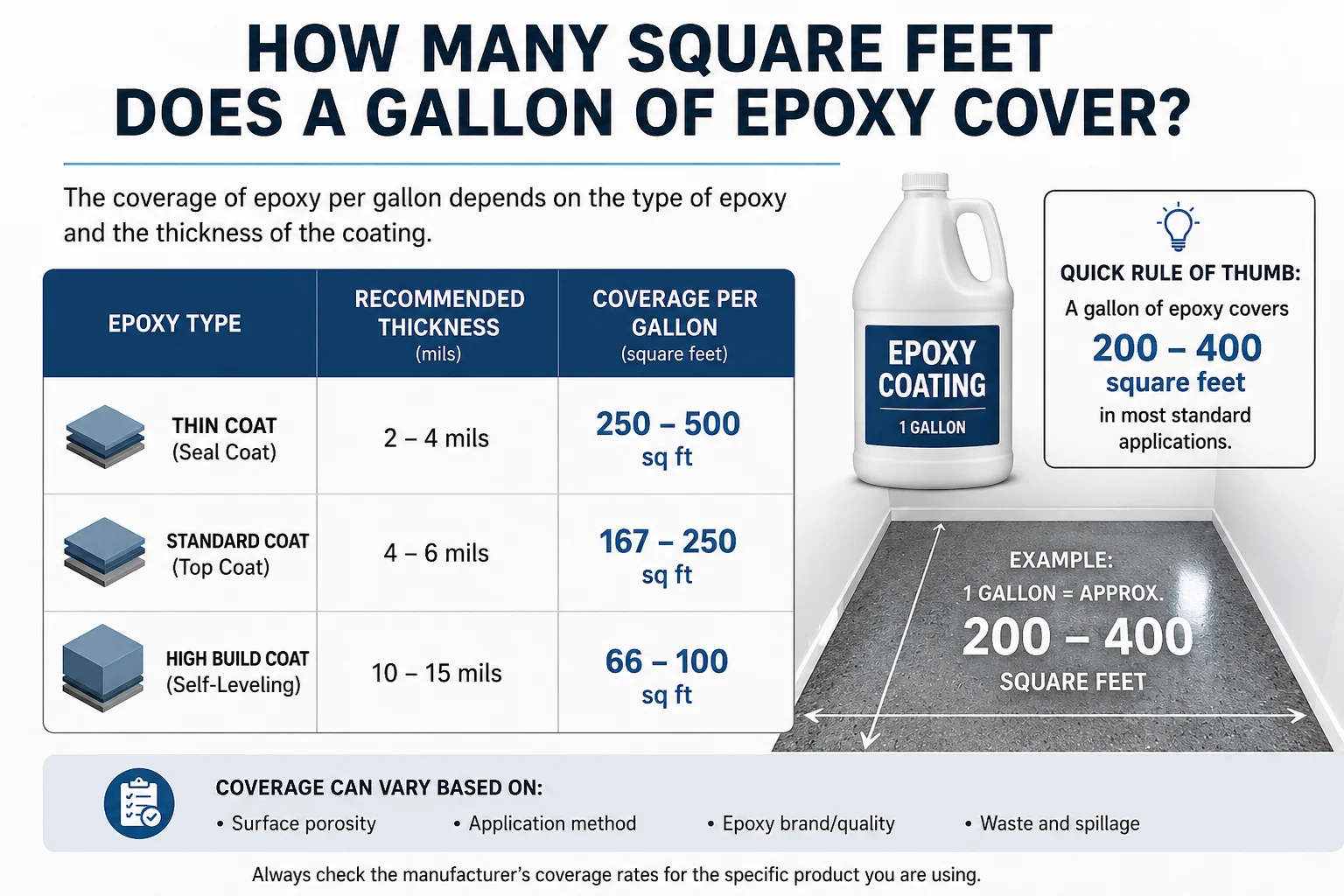
The answer depends on several factors, including the type of epoxy, coating thickness, and the condition of the surface. In most cases, one gallon of epoxy covers between 100 and 300 square feet. However, the exact coverage can vary greatly based on how the epoxy is applied.
Understanding epoxy coverage helps you:
- Estimate project costs
- Avoid buying too little material
- Reduce waste
- Achieve a smooth and durable finish
Whether you are coating a garage floor, basement, workshop, countertop, or industrial surface, this guide explains everything you need to know about epoxy coverage rates.
Understanding Epoxy Coverage Basics
Epoxy coverage refers to the amount of surface area that one gallon of epoxy can coat effectively.
Manufacturers usually provide coverage information based on:
- Dry film thickness
- Surface smoothness
- Application method
- Number of coats
A thin decorative coating will cover much more area than a thick self-leveling industrial floor coating.
For example:
- Thin epoxy coat: up to 300 square feet per gallon
- Medium coat: around 150–200 square feet
- Thick self-leveling coat: 40–80 square feet
That is why there is no single universal answer for every project.
How Many Square Feet Does a Gallon of Epoxy Cover on Average?
Here are the average coverage rates for common epoxy applications:
| Epoxy Type | Average Coverage Per Gallon |
|---|---|
| Thin seal coat | 250–300 sq ft |
| Standard floor coating | 150–200 sq ft |
| Water-based epoxy | 200–300 sq ft |
| Solid epoxy coating | 120–160 sq ft |
| Self-leveling epoxy | 40–80 sq ft |
| Metallic epoxy | 80–150 sq ft |
| Epoxy primer | 200–250 sq ft |
For most residential garage floors, contractors typically estimate 150–200 square feet per gallon for a standard epoxy coating.
Factors That Affect Epoxy Coverage
Several important factors determine how far a gallon of epoxy will go.
Surface Porosity
Concrete absorbs epoxy differently depending on its condition.
Highly porous concrete:
- Absorbs more epoxy
- Requires additional coats
- Reduces overall coverage
Smooth sealed surfaces use less epoxy and provide better spread rates.
Old garage floors often absorb more epoxy than new polished concrete.
Coating Thickness
Thickness is one of the biggest factors affecting epoxy coverage.
A thicker coating:
- Uses more material
- Creates greater durability
- Produces a smoother finish
A thin coating stretches farther but may not last as long in high-traffic areas.
For example:
- 10 mil coating = higher coverage
- 30 mil coating = lower coverage
Industrial floors often use thicker epoxy systems for extra protection.
Type of Epoxy
Different epoxy formulas spread differently.
Water-Based Epoxy
- Thinner consistency
- Covers more area
- Easier to apply
- Less durable
Solid Epoxy
- Thick and durable
- Lower coverage
- Common for garages and workshops
Self-Leveling Epoxy
- Designed for thick pours
- Lowest coverage per gallon
- Excellent smooth finish
Application Method
How you apply epoxy also matters.
Coverage can vary depending on:
- Rollers
- Brushes
- Squeegees
- Sprayers
Professional installers usually achieve better coverage because they spread epoxy evenly.
DIY applications sometimes waste material due to uneven rolling.
Surface Preparation
Proper preparation improves epoxy efficiency.
Grinding and cleaning the floor:
- Removes contaminants
- Helps epoxy bond properly
- Prevents excessive absorption
Skipping preparation often causes uneven coating and wasted epoxy.
Epoxy Coverage Chart by Thickness
This chart shows approximate epoxy coverage based on coating thickness.
| Thickness | Coverage Per Gallon |
|---|---|
| 5 mil | 320 sq ft |
| 10 mil | 160 sq ft |
| 15 mil | 107 sq ft |
| 20 mil | 80 sq ft |
| 30 mil | 53 sq ft |
| 40 mil | 40 sq ft |
As thickness increases, coverage decreases significantly.
Commercial and industrial spaces usually require thicker coatings for heavy-duty protection.
How to Calculate Epoxy Coverage for Your Project
Calculating epoxy coverage is easier than many people think.
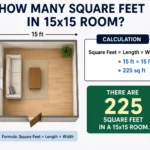
Step 1: Measure the Area
Multiply the room length by width.
Example:
20×20=400
A 20-foot by 20-foot garage equals 400 square feet.
Step 2: Check Coverage Rate
Assume your epoxy covers 200 square feet per gallon.
Step 3: Divide Total Area by Coverage
200400=2
You would need approximately 2 gallons for one coat.
Step 4: Add Extra Material
Most professionals recommend buying 10–15% extra epoxy for:
- Waste
- Touch-ups
- Uneven surfaces
- Second coats
Garage Floor Epoxy Coverage Example
Garage floors are among the most common epoxy projects.
Single-Car Garage
Average size:
- 200–250 square feet
Typical epoxy needed:
- 1–2 gallons
Two-Car Garage
Average size:
- 400–500 square feet
Typical epoxy needed:
- 2–4 gallons
Three-Car Garage
Average size:
- 600–800 square feet
Typical epoxy needed:
- 4–6 gallons
If you are using decorative flakes or metallic epoxy, material requirements may increase.
Different Types of Epoxy and Their Coverage
Not all epoxy products perform the same way.
Self-Leveling Epoxy
Self-leveling epoxy creates a smooth, thick finish.
Best for:
- Commercial spaces
- Warehouses
- Damaged concrete
Coverage:
- 40–80 square feet per gallon
Advantages:
- Extremely durable
- Attractive finish
- Hides imperfections
Disadvantages:
- Expensive
- Uses more material
Solid Epoxy
Solid epoxy contains no water or solvents.
Coverage:
- 120–160 square feet per gallon
Benefits:
- Strong chemical resistance
- Long lifespan
- Excellent durability
This is one of the most popular choices for garage floors.
Water-Based Epoxy
Water-based epoxy is thinner and easier to work with.
Coverage:
- 200–300 square feet per gallon
Advantages:
- Budget friendly
- Low odor
- Easy cleanup
Disadvantages:
- Less durable
- Shorter lifespan
Ideal for light residential use.
Metallic Epoxy
Metallic epoxy creates decorative marble-like effects.
Coverage:
- 80–150 square feet per gallon
Popular for:
- Showrooms
- Retail stores
- Luxury garages
Because of its artistic finish, metallic epoxy often requires additional material.
Common Mistakes That Waste Epoxy
Many DIY installers buy extra epoxy because of avoidable mistakes.
Applying Epoxy Too Thick
A thick coat may seem stronger, but overapplication:
- Causes bubbling
- Wastes product
- Increases drying time
Always follow manufacturer recommendations.
Poor Surface Cleaning
Dust, oil, and grease reduce epoxy adhesion.
Dirty surfaces absorb more epoxy and may require recoating.
Incorrect Mixing Ratios
Epoxy contains resin and hardener components.
Improper mixing can:
- Prevent curing
- Ruin the finish
- Waste expensive materials
Measure carefully.
Ignoring Temperature
Epoxy behaves differently in extreme temperatures.
Hot conditions:
- Speed up curing
Cold conditions:
- Thicken epoxy
- Reduce spreadability
Most epoxy products work best between 60°F and 85°F.
Expert Tips to Maximize Epoxy Coverage
Want better results with less waste? Follow these professional tips.
Use a Primer
Primers seal porous concrete and improve coverage.
Benefits include:
- Better adhesion
- Reduced absorption
- Lower epoxy usage
Repair Cracks First
Cracks and holes consume extra epoxy.
Patch damaged areas before coating the floor.
Use the Correct Roller
Different rollers affect epoxy thickness.
A quality lint-free roller:
- Spreads evenly
- Reduces waste
- Improves finish quality
Work in Sections
Divide large floors into manageable areas.
This helps maintain:
- Consistent thickness
- Better control
- Professional appearance
Buy Slightly More Than Needed
Running out of epoxy mid-project creates visible inconsistencies.
Always keep extra material available.
Is One Gallon of Epoxy Enough?
For some projects, yes.
One gallon may be enough for:
- Small countertops
- Bathroom floors
- Small storage rooms
- Light-duty coatings
However, larger floors usually require multiple gallons.
Here is a quick reference:
| Area Size | Approximate Epoxy Needed |
|---|---|
| 100 sq ft | 1 gallon |
| 200 sq ft | 1–2 gallons |
| 400 sq ft | 2–4 gallons |
| 600 sq ft | 4–5 gallons |
| 1,000 sq ft | 6–10 gallons |
These estimates vary based on coating thickness and epoxy type.
Benefits of Proper Epoxy Coverage Planning
Accurate calculations provide several advantages.
Saves Money
You avoid overbuying expensive materials.
Prevents Delays
Having enough epoxy ensures smooth installation.
Improves Finish Quality
Consistent coverage creates a professional appearance.
Extends Floor Lifespan
Proper thickness improves durability and wear resistance.
Frequently Asked Questions
1. How many square feet does a gallon of epoxy cover on concrete?
Most epoxy coatings cover between 100 and 200 square feet on concrete, depending on surface porosity and coating thickness.
2. How much epoxy do I need for a 2-car garage?
A standard 2-car garage usually needs 2–4 gallons of epoxy for one coat.
3. Does epoxy coverage change with multiple coats?
Yes. Additional coats require more material and reduce total coverage per gallon.
4. What type of epoxy covers the most area?
Water-based epoxy typically covers the most area because it is thinner than solid or self-leveling epoxy.
5. Why is my epoxy coverage lower than expected?
Low coverage often happens because of:
- Porous concrete
- Thick application
- Surface damage
- Poor preparation
Conclusion
So, how many square feet does a gallon of epoxy cover? In most cases, one gallon covers between 100 and 300 square feet, depending on the epoxy type, thickness, and surface condition.
For standard residential floors, you can usually expect around 150–200 square feet per gallon. However, thicker self-leveling systems may cover far less, while thin water-based coatings may stretch farther.
Before starting your project:
- Measure carefully
- Prepare the surface properly
- Choose the right epoxy type
- Buy a little extra material
With accurate planning and proper application, you can achieve a durable, attractive epoxy finish while avoiding unnecessary waste and expense.