

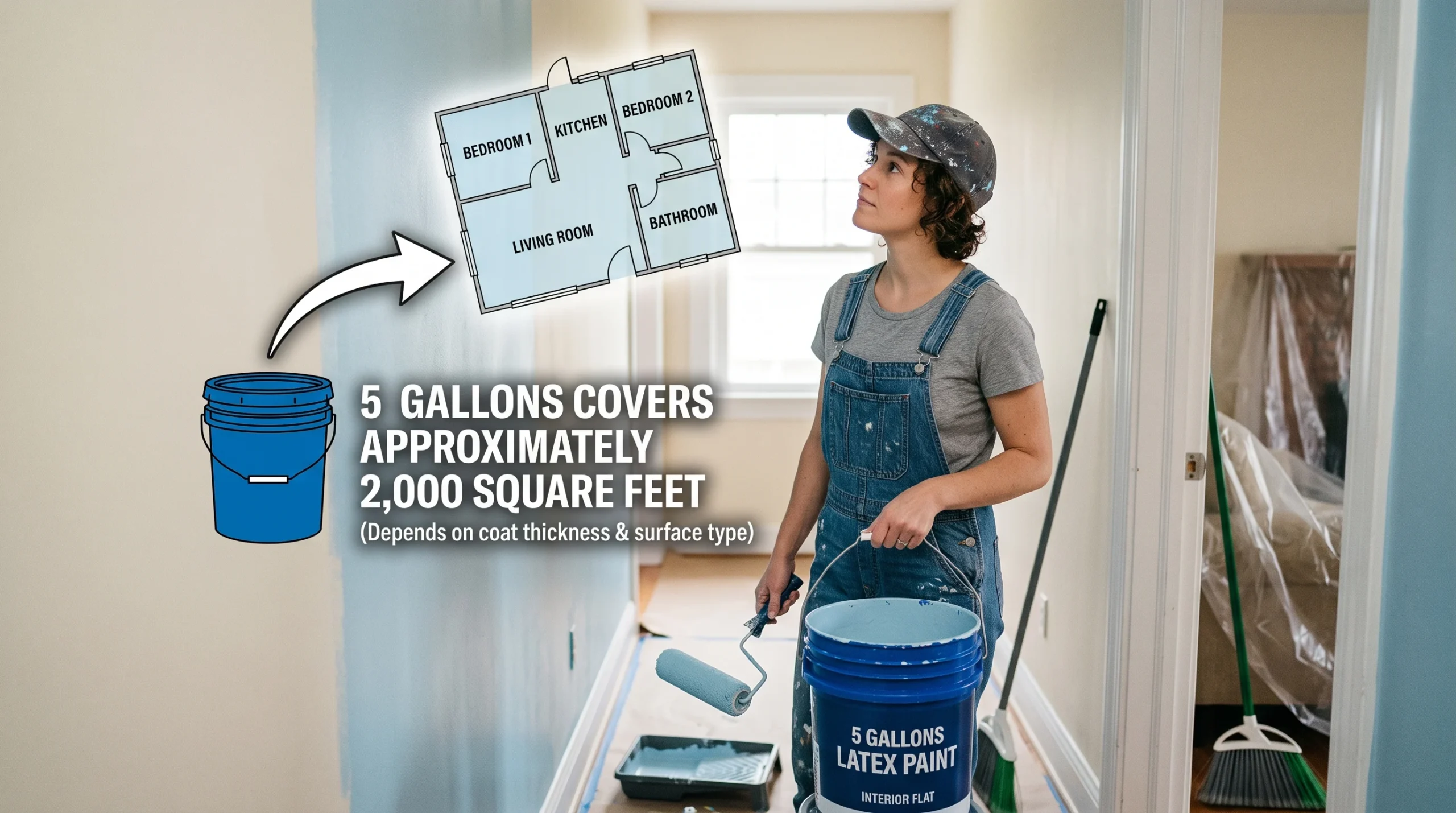
If you are planning a home renovation or painting project, one of the most common questions is: how many square feet does 5 gallons of paint cover?
Paint coverage depends on surface type, paint quality, and how it is applied. However, there is a standard industry estimate that helps with planning.
Five gallons of paint typically covers about 1,600 to 2,000 square feet per coat.
This makes a 5-gallon bucket ideal for painting large rooms, multiple rooms, or even small homes.
Quick Answer
Standard paint coverage rate:
1 gallon≈350 to 400 square feet per coat
Now multiply:
5×(350 to 400)=1750 to 2000 square feet
Final Answer:
5 gallons of paint covers approximately 1,750 to 2,000 square feet per coat.
Standard Paint Coverage Rate
Most interior latex paints cover:
1 gallon≈350 to 400 sq ft
This is for:
- Smooth drywall
- Properly primed surfaces
- One coat of paint
5-Gallon Paint Coverage Calculation
Using the standard range:
Low estimate:
5×350=1750 sq ft
High estimate:
5×400=2000 sq ft
Final range:
1,750 to 2,000 square feet
Interior vs Exterior Coverage Differences
Interior painting:
- Smooth surfaces
- Better coverage
- Less paint absorbed
Exterior painting:
- Rough surfaces (brick, stucco, wood)
- More absorption
- Lower coverage per gallon
So exterior coverage may drop closer to:
- 1,500–1,800 sq ft per 5 gallons
Factors That Affect Paint Coverage
1. Surface texture
Rough walls absorb more paint.
2. Primer usage
Primed walls require less paint.
3. Paint quality
Higher-quality paint spreads further.
4. Application method
- Roller = standard coverage
- Spray = may vary
- Brush = less efficient
How Many Coats You Need
Most projects require:
- 1 coat primer
- 1–2 coats paint
So actual coverage needed is doubled:
1750÷2=875 sq ft effective per coat system
Real-World Painting Examples
Small home interior
- 1,200–1,800 sq ft walls
- 5 gallons usually enough for one coat
Large room repaint
- 300–600 sq ft per room
- Multiple rooms per 5-gallon bucket
Exterior siding
- Depends heavily on material texture
Common Mistakes When Estimating Paint
Ignoring surface texture
Stucco uses more paint than drywall.
Not accounting for multiple coats
Most projects need at least two coats.
Forgetting trim and ceilings
These add extra square footage.
Expert Tips for Accurate Painting
Always measure wall area
Height × width per wall.
Buy extra paint
Plan for 10–15% waste.
Use primer when needed
Improves coverage efficiency.
Why Paint Coverage Matters
Understanding how many square feet 5 gallons of paint covers helps you:
- Avoid running out of paint mid-project
- Reduce overspending
- Plan projects accurately
- Match paint batches correctly
- Improve finish quality
FAQs
1. How many square feet does 5 gallons of paint cover?
About 1,750 to 2,000 square feet per coat.
2. How much does 1 gallon of paint cover?
Around 350–400 square feet.
3. Does texture affect paint coverage?
Yes, rough surfaces use more paint.
4. How many coats do I need?
Usually 1–2 coats.
5. Is 5 gallons enough for a house?
It depends on house size, but often covers multiple rooms.
Conclusion
So, how many square feet does 5 gallons of paint cover? The answer is:
Approximately 1,750 to 2,000 square feet per coat.
Actual coverage varies depending on surface type, paint quality, and application method, but this range is a reliable standard for planning most painting projects.



Pingback: How Many Square Feet in a 4x8 Sheet?