

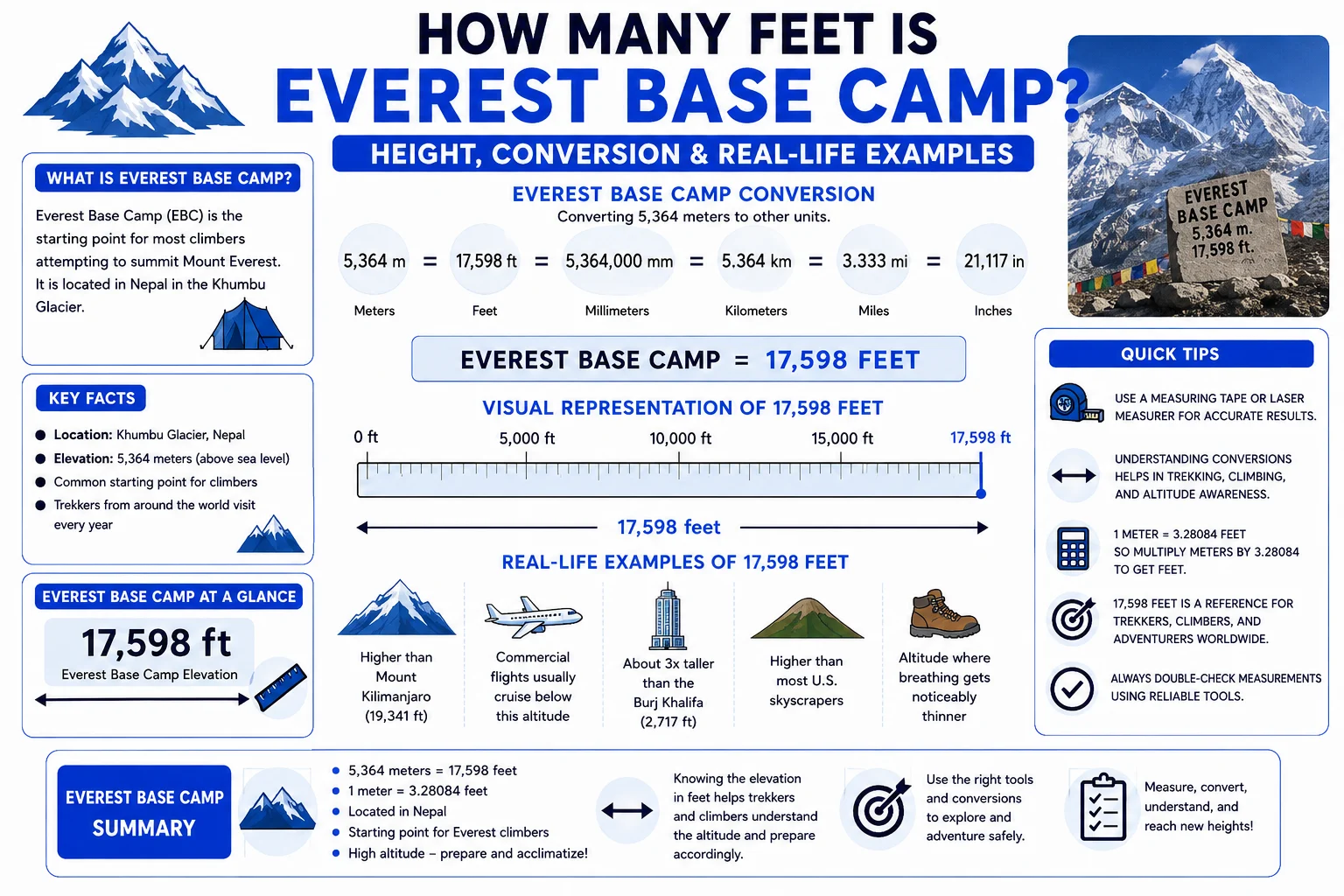
Everest Base Camp sits at an incredible altitude of 17,598 feet (5,364 meters) above sea level on the Nepal side of Mount Everest. For many travelers and trekkers, reaching this height is a once-in-a-lifetime achievement.
When people search “how many feet is Everest Base Camp,” they are usually trying to understand just how high the trek goes and whether the altitude is dangerous, manageable, or suitable for beginners. The short answer is this: Everest Base Camp is extremely high compared to most places people visit, but thousands of trekkers safely reach it every year with proper preparation.
The trek to Everest Base Camp is one of the world’s most famous adventures. However, the altitude plays a major role in the experience. Thin air, colder temperatures, and reduced oxygen make the journey challenging yet rewarding.
In this guide, you’ll learn the exact elevation of Everest Base Camp, why it matters, how it compares to Mount Everest itself, and what you should know before attempting the trek.
Everest Base Camp Elevation Explained
The official elevation of Everest Base Camp on the Nepal side is:
17,598 feet=5,364 meters
This is the southern Everest Base Camp used by most trekkers and climbers heading toward the summit of Mount Everest.
Elevation in Feet
Everest Base Camp stands at approximately 17,598 feet above sea level. That is over three miles high in the atmosphere.
To put this into perspective:
- Commercial airplanes cruise around 30,000–40,000 feet
- Denver, Colorado sits at about 5,280 feet
- Everest Base Camp is more than three times higher than Denver
At this height, oxygen levels are much lower than at sea level.
Elevation in Meters
Most trekking maps use meters, especially in Nepal. The base camp elevation is:
- 5,364 meters
You may see slight variations depending on GPS devices or mapping sources, but the accepted figure remains close to 5,364 meters.
Difference Between North and South Base Camp
There are actually two Everest Base Camps:
| Base Camp | Location | Elevation |
|---|---|---|
| South Base Camp | Nepal | 17,598 feet |
| North Base Camp | Tibet/China | 16,900 feet |
Most tourists and trekkers visit the Nepal side because it offers the classic trekking route through the Khumbu region.
Where Is Everest Base Camp Located?
Everest Base Camp lies in the Himalayan mountain range near Mount Everest.
Nepal Side
The most popular Everest Base Camp trek starts in Lukla, Nepal. Trekkers pass through famous villages such as:
- Namche Bazaar
- Tengboche
- Dingboche
- Lobuche
- Gorak Shep
The route winds through the Sagarmatha National Park and offers breathtaking mountain views.
Tibet Side
The northern base camp is located in Tibet and is accessible by road. While easier to reach by vehicle, it is less popular for trekking adventures.
Most travelers asking “how many feet is Everest Base Camp” are referring to the Nepal base camp.
How High Is Everest Compared to Base Camp?
Mount Everest itself rises far above the base camp.
Here is a comparison:
| Location | Elevation |
|---|---|
| Everest Base Camp | 17,598 feet |
| Camp I | 19,900 feet |
| Camp II | 21,300 feet |
| Camp III | 23,500 feet |
| Camp IV | 26,000 feet |
| Mount Everest Summit | 29,032 feet |
Why the Difference Matters
Everest Base Camp is already at an extreme altitude. However, climbers still have over 11,000 vertical feet remaining before reaching the summit.
This explains why climbing Everest is far more dangerous than trekking to base camp.
Why Everest Base Camp’s Altitude Matters
The altitude at Everest Base Camp affects your body in several ways.
Oxygen Levels
At 17,598 feet, the air contains significantly less oxygen than at sea level.
Many trekkers notice:
- Faster breathing
- Fatigue
- Slower walking speed
- Difficulty sleeping
Your body must adapt gradually.
Altitude Sickness Risks
Altitude sickness is one of the biggest concerns during the trek.
Symptoms include:
- Headaches
- Nausea
- Dizziness
- Loss of appetite
- Fatigue
Severe cases can become dangerous if ignored.
The key to prevention is proper acclimatization.
Weather Conditions
The high elevation also creates harsh weather.
Conditions may include:
- Freezing nights
- Strong winds
- Sudden snowfall
- Thin dry air
Temperatures can drop below zero even during trekking season.
Can Beginners Handle Everest Base Camp?
Yes, many beginners successfully complete the Everest Base Camp trek every year.
However, the altitude makes it physically demanding.
Fitness Requirements
You do not need technical climbing skills, but you should have:
- Good cardiovascular fitness
- Strong legs
- Basic hiking experience
- Mental endurance
Walking several hours daily at high altitude is challenging.
Trek Difficulty
The Everest Base Camp trek is considered moderate to difficult.
Challenges include:
- Steep climbs
- Rocky terrain
- Cold weather
- Long trekking days
- Thin air
Most people complete the trek in 12–14 days.
Acclimatization Tips
Proper acclimatization is critical.
Helpful strategies include:
- Ascend slowly
- Take rest days
- Drink plenty of water
- Avoid alcohol
- Eat enough calories
- Sleep properly
Many itineraries include acclimatization days in Namche Bazaar and Dingboche.
Trekking to Everest Base Camp
The trek itself is one of the greatest attractions in Nepal.
Trek Length
A standard Everest Base Camp trek usually covers:
- Around 80–90 miles round trip
- Approximately 12–14 trekking days
Distances vary slightly depending on the route.
Popular Route
The classic trek follows this path:
- Fly to Lukla
- Trek to Phakding
- Reach Namche Bazaar
- Continue through Tengboche
- Trek to Dingboche
- Arrive at Lobuche
- Reach Gorak Shep
- Hike to Everest Base Camp
Many trekkers also climb Kala Patthar for panoramic Everest views.
Best Seasons to Visit
The best trekking seasons are:
| Season | Conditions |
|---|---|
| Spring (March–May) | Mild weather and clear views |
| Autumn (September–November) | Stable weather and dry trails |
Winter is colder, while monsoon season brings rain and cloudy conditions.
Everest Base Camp Elevation Comparison Chart
Sometimes numbers alone are hard to visualize. Here is how Everest Base Camp compares to famous locations.
| Place | Elevation |
|---|---|
| Sea Level | 0 feet |
| Denver, Colorado | 5,280 feet |
| Machu Picchu | 7,972 feet |
| Mount Kilimanjaro | 19,341 feet |
| Everest Base Camp | 17,598 feet |
| Mount Everest Summit | 29,032 feet |
This comparison shows that Everest Base Camp is already higher than many famous mountain destinations around the world.
Common Mistakes Trekkers Make
Many altitude-related problems happen because of avoidable mistakes.
Going Too Fast
Trekkers sometimes rush to reach base camp quickly.
This increases altitude sickness risk dramatically.
A slow pace is safer and more enjoyable.
Ignoring Hydration
Dry mountain air causes dehydration faster than expected.
Trekkers should drink several liters of water daily.
Packing Incorrectly
Some travelers underestimate the cold.
Important gear includes:
- Insulated jacket
- Warm gloves
- Layered clothing
- Hiking boots
- Sleeping bag
- Sunscreen
- Sunglasses
Weather changes quickly at high elevation.
Expert Tips for High-Altitude Trekking
Experienced guides recommend several strategies for a successful Everest Base Camp trek.
Train Before the Trip
Prepare with:
- Stair climbing
- Long walks
- Hiking practice
- Cardio workouts
Building endurance makes the trek easier.
Listen to Your Body
Never ignore altitude sickness symptoms.
Descending early is safer than pushing forward.
Use the “Slow and Steady” Approach
Many first-time trekkers try to walk too fast.
At high altitude, slower movement conserves energy and improves acclimatization.
Carry Snacks
Energy bars, nuts, and dried fruit help maintain energy during long hiking days.
Protect Yourself From the Sun
UV exposure is stronger at high altitude.
Wear:
- Sunscreen
- Lip balm
- Sunglasses
- A hat
9. FAQs
How many feet above sea level is Everest Base Camp?
Everest Base Camp on the Nepal side sits at approximately 17,598 feet above sea level.
Is Everest Base Camp higher than Mount Kilimanjaro?
No. Mount Kilimanjaro’s summit is about 19,341 feet, which is higher than Everest Base Camp.
Can you get altitude sickness at Everest Base Camp?
Yes. Altitude sickness is common because of the high elevation and reduced oxygen levels.
How long does it take to trek to Everest Base Camp?
Most trekkers complete the round-trip trek in about 12–14 days.
Do you need climbing experience for Everest Base Camp?
No technical climbing experience is required. However, good fitness and preparation are important.
10. Conclusion
So, how many feet is Everest Base Camp? The famous trekking destination stands at approximately 17,598 feet (5,364 meters) above sea level on the Nepal side of Mount Everest.
That altitude makes Everest Base Camp one of the highest and most iconic trekking destinations in the world. While reaching it does not require technical climbing skills, the elevation creates real physical challenges. Proper acclimatization, hydration, fitness, and preparation are essential for a safe and enjoyable trek.
For adventure travelers, the journey to Everest Base Camp offers far more than just a number in feet. It provides breathtaking Himalayan scenery, cultural experiences, personal achievement, and a deeper appreciation for the power of the world’s tallest mountains.
Discover More Articles
How Many Feet Long Is a Cruise Ship?