

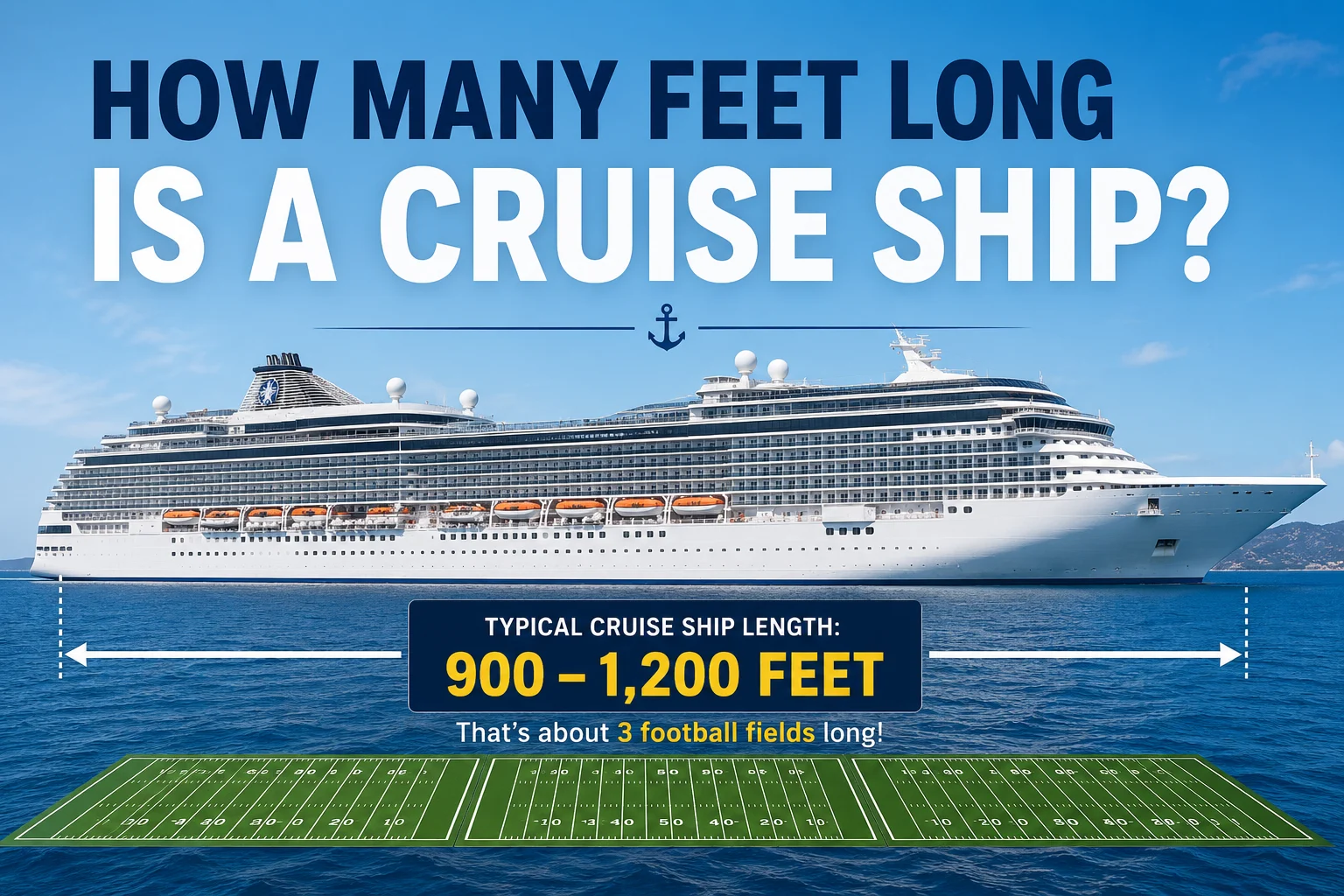
Cruise ships are some of the largest moving structures ever built. When people first see one in person, the size can feel almost unbelievable. That leads many travelers to ask: how many feet long is a cruise ship?
The answer depends on the type of ship. Small expedition vessels may be only 300 feet long, while the world’s largest cruise ships stretch beyond 1,100 feet. Most modern cruise ships fall somewhere between 800 and 1,100 feet in length.
Today’s mega cruise ships are essentially floating cities. They contain restaurants, theaters, water parks, shopping areas, casinos, and even ice-skating rinks. Their enormous size allows cruise lines to carry thousands of passengers comfortably across oceans worldwide.
In this guide, you’ll learn the average cruise ship length, how different ship classes compare, and why modern cruise ships have become so massive.
Understanding Cruise Ship Length
Cruise ship length usually refers to the ship’s total measurement from the bow (front) to the stern (back).
Shipbuilders often measure length in feet or meters. In the cruise industry, feet are commonly used in the United States.
For example:
- A small cruise ship may measure 500 feet
- A large cruise ship may exceed 1,000 feet
- The biggest cruise ships can reach nearly 1,200 feet
Many people confuse ship length with tonnage. However, they are different measurements.
Length vs. Gross Tonnage
| Measurement | Meaning |
|---|---|
| Length | Distance from front to back |
| Gross Tonnage | Internal volume of the ship |
| Beam | Width of the ship |
| Draft | Depth below water |
A ship can be longer without necessarily being heavier. Cruise designers balance length, width, and height carefully for safety and comfort.
Average Cruise Ship Length
If you are wondering how many feet long is a cruise ship on average, most modern cruise ships are between 900 and 1,100 feet long.
Here’s a breakdown by category.
Small Cruise Ships
Small cruise ships are typically:
- 300–600 feet long
- Carry 100–1,000 passengers
- Designed for intimate experiences
These ships often focus on:
- Expedition cruising
- Luxury travel
- River and regional routes
Because they are smaller, they can access ports that giant ships cannot.
Advantages of Small Ships
- Less crowded
- Easier boarding
- More personalized service
- Access to remote destinations
Drawbacks
- Fewer entertainment options
- Smaller cabins
- Limited dining choices
Mid-Size Cruise Ships
Mid-size ships usually measure:
- 700–900 feet long
- Carry 1,000–3,000 passengers
These ships balance comfort with convenience. Many travelers prefer them because they feel large without being overwhelming.
Mid-size vessels commonly include:
- Multiple restaurants
- Pools
- Theaters
- Fitness centers
- Family entertainment
Large Cruise Ships
Large cruise ships generally range from:
- 900–1,100 feet long
- Carry 3,000–5,500 passengers
This category includes many popular vessels operated by major cruise lines.
These ships often feature:
- Water parks
- Shopping promenades
- Broadway-style shows
- Casinos
- Surf simulators
At this size, cruise ships become floating resorts.
Mega Cruise Ships
Mega cruise ships are the giants of the sea.
Typical dimensions include:
- 1,100–1,200 feet long
- More than 5,000 passengers
- Up to 20 decks
Some of the newest ships carry over 7,000 guests when fully occupied.
These ships can contain:
- Zip lines
- Ice arenas
- Aqua theaters
- Multi-story slides
- Entire entertainment districts
Modern engineering allows these enormous vessels to remain surprisingly stable.
How Long Is the Largest Cruise Ship in the World?
The largest cruise ships in the world are over 1,190 feet long.
For perspective:
- That is longer than three football fields
- Nearly as tall as some skyscrapers laid sideways
- Longer than many aircraft carriers
Royal Caribbean’s newest Icon-class ships rank among the largest ever built.
1198 feet≈3.3 football fields
These massive vessels are designed to maximize:
- Passenger capacity
- Entertainment space
- Ocean stability
- Fuel efficiency
Despite their huge size, modern navigation systems help captains maneuver safely through ports worldwide.
Cruise Ship Length Comparison Table
Here’s a simple comparison of common cruise ship sizes.
| Cruise Ship Type | Average Length | Passenger Capacity |
|---|---|---|
| Small Ship | 300–600 feet | 100–1,000 |
| Mid-Size Ship | 700–900 feet | 1,000–3,000 |
| Large Ship | 900–1,100 feet | 3,000–5,500 |
| Mega Ship | 1,100–1,200 feet | 5,000–7,500+ |
This table helps travelers understand just how varied cruise ship dimensions can be.
Why Are Cruise Ships So Long?
Cruise ships have grown dramatically over the past few decades.
Several factors drive this trend.
More Passenger Capacity
Longer ships can hold more cabins and public spaces. Cruise companies increase revenue by carrying more guests.
A larger vessel also supports:
- More restaurants
- Bigger pools
- Expanded entertainment
Better Stability
Long ships often provide smoother sailing.
A wider and longer hull helps reduce motion caused by waves. That improves passenger comfort during rough seas.
More Onboard Attractions
Modern travelers expect resorts at sea.
Long cruise ships create space for:
- Shopping malls
- Water parks
- Sports courts
- Fine dining
- Theaters
Cruise lines compete heavily on onboard experiences.
Fuel Efficiency Improvements
Newer ships use advanced engineering to improve efficiency despite their enormous size.
Features may include:
- Aerodynamic hull designs
- Energy-saving engines
- Smart navigation systems
Longer ships can actually operate more efficiently per passenger.
Cruise Ship Length Compared to Famous Landmarks
Many people struggle to visualize a 1,000-foot ship. Comparisons help make the scale easier to understand.
Football Fields
A typical football field is 360 feet long including end zones.
360 feet1100 feet≈3.06
That means a large cruise ship can stretch longer than three football fields.
Eiffel Tower
The Eiffel Tower stands about 1,083 feet tall.
Some cruise ships are actually longer than the tower’s height.
City Blocks
In many cities, a block measures around 300 feet.
A mega cruise ship may equal:
- Three to four city blocks in length
This helps explain why cruise terminals are so massive.
How Cruise Ship Length Impacts Passenger Experience
Cruise ship size changes the overall vacation experience.
More Amenities
Larger ships offer:
- More dining choices
- Bigger entertainment venues
- More activities
Passengers rarely run out of things to do.
Longer Walking Distances
One downside is the amount of walking required.
Guests may travel:
- Several thousand steps daily
- Across multiple decks
- Between distant attractions
Comfortable shoes become essential.
Crowds and Atmosphere
Large ships can feel busy, especially during peak seasons.
Smaller ships usually provide:
- Quieter environments
- Personalized service
- Relaxed atmospheres
Choosing the right size depends on personal preference.
Cruise Ship Size Categories Explained
Understanding ship classes can help travelers choose the right cruise.
Small Cruise Ships
Best for:
- Luxury travelers
- Expedition cruising
- Quiet vacations
Common destinations include:
- Alaska
- Antarctica
- Norwegian fjords
Mid-Size Cruise Ships
Ideal for travelers wanting:
- Balanced entertainment
- Moderate crowds
- Traditional cruise experiences
These ships often appeal to couples and families alike.
Large Cruise Ships
Perfect for:
- Families
- First-time cruisers
- Entertainment-focused vacations
These vessels often sail Caribbean routes.
Mega Cruise Ships
Best for travelers who enjoy:
- Nonstop activities
- Large crowds
- Resort-style vacations
These ships are attractions themselves.
Common Myths About Cruise Ship Size
Cruise ships are often misunderstood.
Myth 1: Bigger Ships Are Always Better
Not necessarily.
Some travelers prefer:
- Quiet environments
- Smaller passenger counts
- More intimate service
Others love mega ships for their entertainment.
The best size depends on your travel style.
Myth 2: Large Ships Are Unsafe
Modern cruise ships follow strict safety regulations.
Large ships use advanced systems including:
- GPS navigation
- Stabilizers
- Weather tracking
- Emergency response technology
In many cases, larger ships are more stable than smaller vessels.
Myth 3: All Cruise Ships Are Similar in Size
Cruise ships vary dramatically.
Some luxury vessels hold only a few hundred guests, while mega ships resemble floating cities.
Expert Tips for Choosing the Right Cruise Ship Size
Before booking, consider these practical tips.
Choose Small Ships If You Want:
- Relaxation
- Unique destinations
- Personalized service
Choose Mid-Size Ships If You Want:
- Balanced experiences
- Moderate pricing
- Comfortable crowds
Choose Large or Mega Ships If You Want:
- Endless entertainment
- Family attractions
- Resort-style vacations
Consider Port Access
Some destinations restrict ship size.
Smaller vessels may dock closer to city centers or access remote regions unavailable to giant ships.
Think About Motion Sensitivity
People prone to seasickness often feel more stable on larger ships due to advanced stabilization systems.
FAQs
How many feet long is the average cruise ship?
The average modern cruise ship is typically between 900 and 1,100 feet long.
What is the longest cruise ship ever built?
Some of the newest mega cruise ships exceed 1,190 feet in length, making them among the largest passenger vessels ever constructed.
How many decks does a cruise ship have?
Most cruise ships have between 10 and 20 decks depending on their size.
Are cruise ships longer than aircraft carriers?
Some mega cruise ships are similar in length to aircraft carriers, although military ships differ greatly in design and purpose.
Why are modern cruise ships getting bigger?
Cruise lines build larger ships to carry more passengers and provide more attractions, entertainment, and amenities.
Conclusion
So, how many feet long is a cruise ship? The answer varies widely depending on the type of vessel. Smaller cruise ships may measure only 300 feet, while today’s mega cruise ships can exceed 1,100 feet in length.
Modern cruise ships are engineering marvels built to deliver comfort, entertainment, and unforgettable travel experiences. Their massive size allows cruise lines to create floating resorts packed with restaurants, theaters, pools, and luxury accommodations.
Whether you prefer a small expedition ship or a giant floating city, understanding cruise ship dimensions can help you choose the perfect vacation experience.
Discover More Articles
How Many Square Feet Is 10×11?