
If you are planning a roofing project, one of the first questions you will probably ask is: how many square feet is one bundle of shingles?
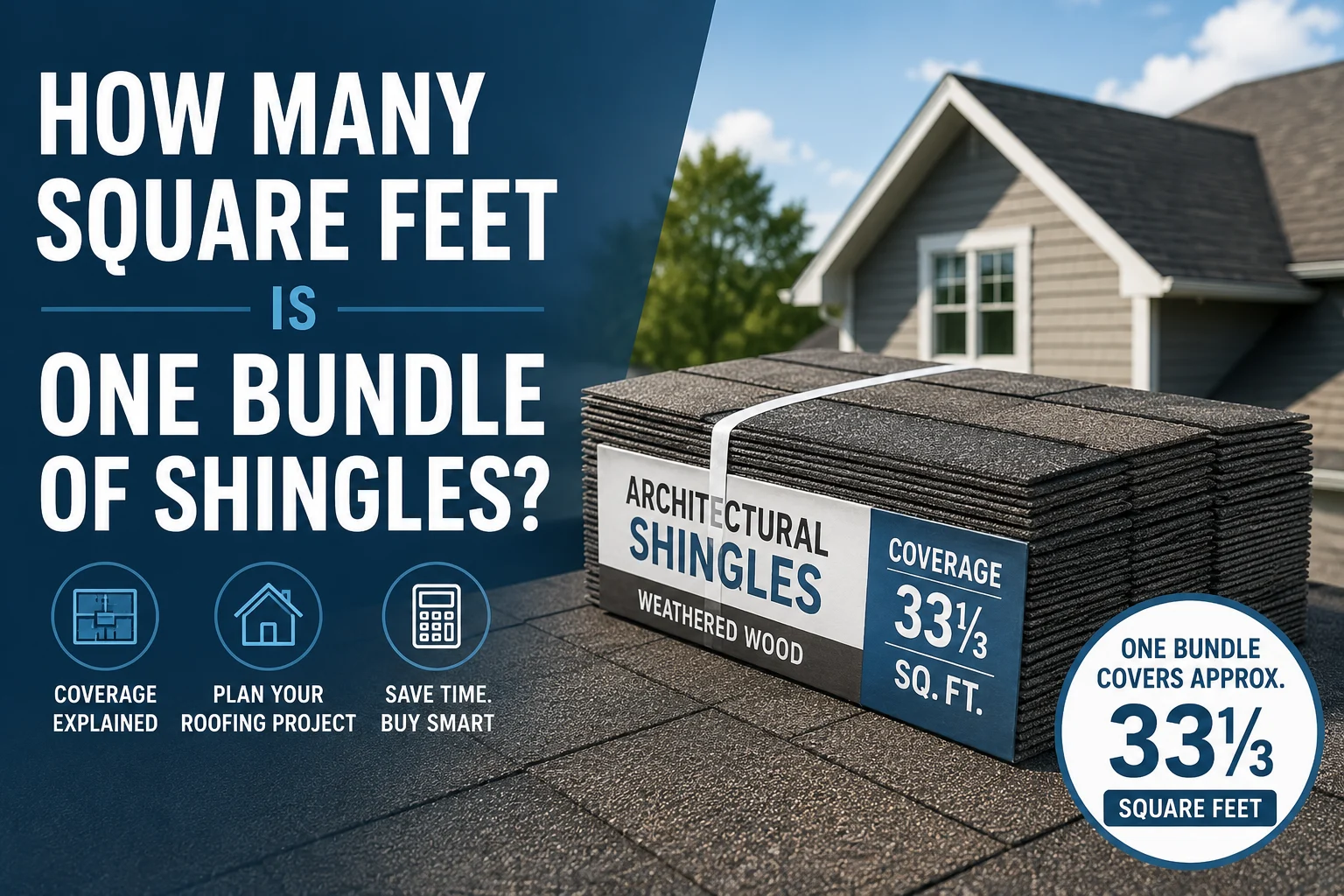
The short answer is that one bundle of shingles usually covers about 33.3 square feet of roof area. However, the exact coverage depends on the type of shingles, manufacturer, roof design, and installation method.
Understanding shingle coverage is important because buying too few bundles can delay your project, while buying too many wastes money. Whether you are replacing a roof yourself or hiring a contractor, knowing how roofing bundles work helps you estimate costs accurately and avoid surprises.
In this guide, you will learn:
- How much area one bundle covers
- How roofing squares work
- How many bundles you need for different roof sizes
- Common roofing calculation mistakes
- Tips from roofing professionals
Let’s break it down step by step.
Understanding Roofing Measurements
Before calculating shingles, you need to understand how roofing materials are measured.
What Is a Roofing Square?
Roofers use a unit called a roofing square.
A roofing square equals:
1 roofing square=100 square feet
Instead of saying a roof is 2,000 square feet, roofers may say it is “20 squares.”
This system makes estimating materials faster and simpler.
Why Are Shingles Sold in Bundles?
Shingles are heavy. Selling them by the square would make them difficult to handle.
So manufacturers divide one roofing square into smaller packages called bundles.
For most asphalt shingles:
- 3 bundles = 1 roofing square
- 1 square = 100 square feet
That means each bundle typically covers:
3100≈33.3 square feet
How Many Square Feet Does One Bundle of Shingles Cover?
In most cases, one bundle of shingles covers approximately 33 square feet.
However, coverage varies based on shingle type.
Standard Asphalt Shingles
Traditional 3-tab asphalt shingles usually require:
- 3 bundles per square
- Around 33.3 square feet per bundle
These are the most common roofing shingles in residential construction.
Architectural Shingles
Architectural or dimensional shingles are thicker and heavier.
Some brands still require 3 bundles per square, while others may need 4 or more bundles for the same coverage.
Always check the manufacturer label before purchasing.
Premium or Designer Shingles
Luxury shingles often have lower coverage per bundle because they are larger, thicker, and more layered.
Coverage may drop to:
- 20–25 square feet per bundle
This increases material costs significantly.
Shingle Coverage Chart
Here is a simple chart showing average bundle coverage by shingle type.
| Shingle Type | Bundles Per Square | Coverage Per Bundle |
|---|---|---|
| 3-Tab Asphalt | 3 | 33.3 sq ft |
| Architectural | 3–4 | 25–33 sq ft |
| Premium Designer | 4–5 | 20–25 sq ft |
| Wood Shingles | Varies | 20–30 sq ft |
Remember that these are averages. Manufacturer specifications always matter.
How Many Bundles of Shingles Make a Square?
Most roofing systems use:
3 bundles=1 roofing square=100 square feet
This rule applies to many standard asphalt shingles.
Here’s a quick conversion chart:
| Roof Area | Roofing Squares | Bundles Needed |
|---|---|---|
| 100 sq ft | 1 | 3 bundles |
| 200 sq ft | 2 | 6 bundles |
| 500 sq ft | 5 | 15 bundles |
| 1,000 sq ft | 10 | 30 bundles |
| 2,000 sq ft | 20 | 60 bundles |
This estimate does not include waste or extra materials.
How to Calculate Shingles for Your Roof
Calculating roofing shingles is easier than most homeowners think.
Follow these steps.
Step 1: Measure Roof Area
Measure the length and width of each roof section.
Then calculate area:
Roof Area=Length×Width
Add all sections together for total square footage.
For example:
- Roof section A = 20 × 30 = 600 sq ft
- Roof section B = 15 × 20 = 300 sq ft
Total roof area = 900 square feet.
Step 2: Convert Square Feet Into Roofing Squares
Next, divide the roof area by 100.
Roofing Squares=100Total Square Feet
For a 900 square foot roof:
100900=9 squares
Step 3: Calculate Bundles Needed
Multiply roofing squares by the number of bundles per square.
For standard shingles:
9 squares×3=27 bundles
So a 900 square foot roof usually needs about 27 bundles.
Step 4: Add Waste Factor
Always add extra material for:
- Cutting
- Mistakes
- Ridge caps
- Valleys
- Repairs
Typical waste factors:
| Roof Type | Waste Factor |
|---|---|
| Simple roof | 10% |
| Moderate roof | 12–15% |
| Complex roof | 15–20% |
For a simple roof:
27×1.10≈30 bundles
You would purchase about 30 bundles total.
Example Roof Calculations
Here are some real-world examples.
1,000 Square Foot Roof
Calculation:
1000÷100=10 squares
Then:
10×3=30 bundles
Add 10% waste:
30×1.10=33 bundles
Estimated total: 33 bundles
1,500 Square Foot Roof
Calculation:
1500÷100=15 squares
Bundles needed:
15×3=45 bundles
With waste:
45×1.10≈50 bundles
Estimated total: 50 bundles
2,000 Square Foot Roof
Calculation:
2000÷100=20 squares
Bundles needed:
20×3=60 bundles
With waste:
60×1.10=66 bundles
Estimated total: 66 bundles
Factors That Affect Shingle Coverage
Not every roof uses shingles the same way. Several factors can change bundle coverage.
Roof Pitch
Steeper roofs have more surface area than flat roofs.
A house with a steep slope may require significantly more shingles than the home’s floor size suggests.
Shingle Style
Thicker shingles cover less area per bundle.
Architectural shingles often weigh more and need additional bundles.
Roof Complexity
Features like these increase waste:
- Valleys
- Dormers
- Skylights
- Chimneys
- Multiple roof angles
Complex roofs require more cuts and more extra shingles.
Manufacturer Specifications
Different brands package shingles differently.
Some may use:
- 3 bundles per square
- 4 bundles per square
- Special ridge cap bundles
Always read the product packaging carefully.
Common Mistakes When Estimating Shingles
Many homeowners underestimate roofing materials.
Here are the biggest mistakes to avoid.
Forgetting the Waste Factor
One of the most common roofing mistakes is buying exactly enough shingles without extra material.
Even professional roofers add waste allowances.
Ignoring Ridge Caps and Starter Shingles
Roof systems need more than field shingles.
You may also need:
- Starter strips
- Ridge cap shingles
- Ice and water shield
- Underlayment
- Roofing nails
These add to the total project cost.
Measuring the House Instead of the Roof
The roof area is often larger than the home’s floor size because of pitch and overhangs.
A 2,000 square foot home may have a 2,300+ square foot roof.
Not Checking Local Building Codes
Some areas require specific roofing materials or installation methods.
Always verify local requirements before starting your project.
Expert Tips for Buying Roofing Shingles
Professional roofers follow a few simple rules to avoid problems.
Buy Extra Bundles
It is smart to buy 1–2 extra bundles.
Why?
- Future repairs
- Color matching
- Installation mistakes
Manufacturing colors can vary between production batches.
Match Lot Numbers
Always check that bundles come from the same production lot.
This helps ensure consistent color across the roof.
Consider Weather Conditions
Roofing during hot or wet weather may increase waste and damage shingles during installation.
Compare Warranty Coverage
Some shingles include:
- 20-year warranties
- 30-year warranties
- Lifetime limited warranties
Longer warranties may offer better durability.
Are Architectural Shingles Worth It?
Many homeowners upgrade from 3-tab shingles to architectural shingles.
Benefits include:
- Better wind resistance
- Longer lifespan
- Improved curb appeal
- Better resale value
Drawbacks include:
- Higher cost
- Heavier weight
- More bundles needed sometimes
For many homes, architectural shingles provide better long-term value despite the higher upfront price.
Frequently Asked Questions
How many square feet does one bundle of shingles cover?
Most standard asphalt shingle bundles cover approximately 33.3 square feet.
How many bundles of shingles do I need for 2,000 square feet?
A 2,000 square foot roof typically requires around 60 bundles, plus extra for waste.
How many bundles are in one roofing square?
Most asphalt shingles require 3 bundles per roofing square.
Do architectural shingles cover the same area?
Not always. Some architectural shingles require 4 bundles per square instead of 3.
Should I buy extra shingles?
Yes. Most experts recommend buying 10–15% extra for waste and future repairs.
Conclusion
So, how many square feet is one bundle of shingles? In most cases, one bundle covers around 33 square feet, and three bundles equal one roofing square or 100 square feet.
However, the exact coverage depends on the shingle type, roof pitch, manufacturer, and installation complexity. Understanding these calculations helps homeowners budget accurately, avoid material shortages, and complete roofing projects more efficiently.
Before purchasing roofing materials, always:
- Measure carefully
- Add a waste factor
- Check manufacturer specifications
- Buy a little extra material
With the right calculations, your roofing project will be smoother, more cost-effective, and far less stressful.
Discover More Articles
How Many Square Feet in a 15×15 Room?