

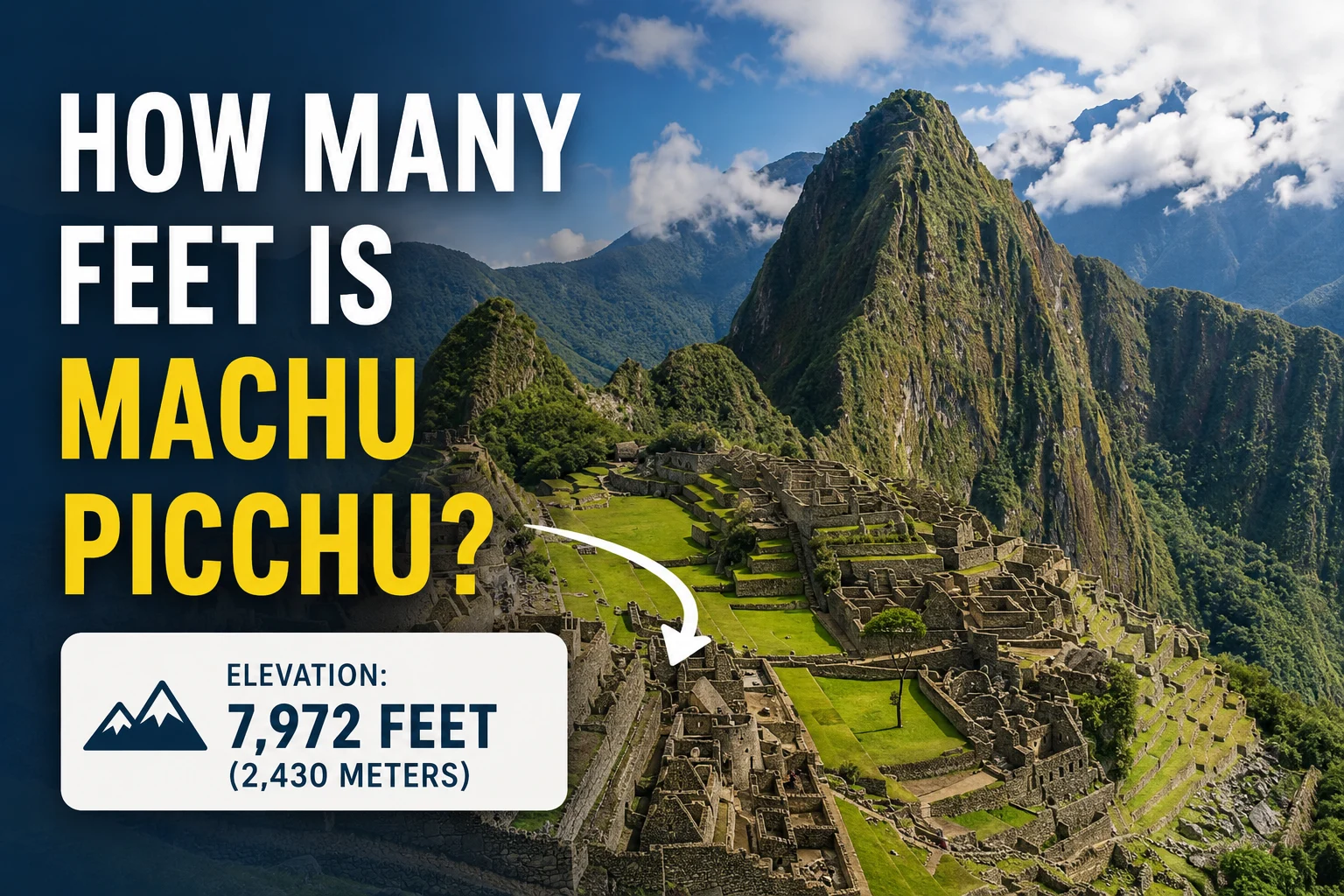
Machu Picchu is one of the most famous ancient sites in the world. Travelers, hikers, and history lovers often ask the same question: how many feet is Machu Picchu?
The exact elevation of Machu Picchu is approximately 7,972 feet above sea level. In metric measurements, that equals about 2,430 meters.
Although this is very high, Machu Picchu sits lower than many other places in Peru, including Cusco. Still, its mountain location gives visitors breathtaking views, cooler temperatures, and thinner air that can affect some travelers.
In this guide, you’ll learn everything about the elevation of Machu Picchu, why it matters, how it compares to other famous places, and what visitors should know before traveling there.
The Exact Elevation of Machu Picchu
The elevation of Machu Picchu is:
| Measurement | Elevation |
|---|---|
| Feet | 7,972 feet |
| Meters | 2,430 meters |
This elevation refers to the main archaeological site itself. The surrounding mountains can rise much higher.
Many people are surprised to learn that Machu Picchu is not the highest destination in Peru. However, it still sits high enough in the Andes Mountains to create stunning scenery and unique weather conditions.
Quick Answer
If you searched “how many feet is Machu Picchu,” the short answer is:
Machu Picchu is about 7,972 feet above sea level.
Where Is Machu Picchu Located?
Machu Picchu is located in southern Peru in the Andes Mountains. It sits above the Sacred Valley near the town of Aguas Calientes.
The ancient Inca citadel was built on a mountain ridge surrounded by steep green peaks and deep valleys. Because of this location, the site often appears wrapped in clouds and mist.
The combination of mountain elevation and jungle climate creates one of the most beautiful landscapes in the world.
Geographic Highlights
- Country: Peru
- Mountain range: Andes Mountains
- Region: Cusco Region
- Elevation: 7,972 feet
- Nearby river: Urubamba River
Its remote location helped protect the city for centuries after the Spanish conquest.
Why Is Machu Picchu So Famous?
Machu Picchu is famous because it is one of the greatest surviving achievements of the Inca civilization.
Built in the 15th century, the city remained hidden from much of the outside world until American explorer Hiram Bingham brought international attention to it in 1911.
Today, Machu Picchu is a UNESCO World Heritage Site and one of the New Seven Wonders of the World.
Reasons Millions Visit Every Year
- Incredible mountain scenery
- Ancient Inca architecture
- Rich cultural history
- Famous hiking trails
- Unique engineering techniques
The site’s elevation also adds to its mystery and beauty. Seeing stone ruins surrounded by towering mountains nearly 8,000 feet above sea level is unforgettable.
How High Is Machu Picchu Compared to Other Places?
Understanding the elevation becomes easier when comparing Machu Picchu to familiar locations.
Machu Picchu vs Cusco
Cusco sits at approximately 11,152 feet above sea level.
That means Cusco is actually much higher than Machu Picchu. Many travelers feel altitude sickness more strongly in Cusco than at Machu Picchu.
| Location | Elevation |
|---|---|
| Machu Picchu | 7,972 feet |
| Cusco | 11,152 feet |
This is why many tour guides recommend spending a day or two adjusting in Cusco before hiking.
Machu Picchu vs Denver
Denver, Colorado is called the “Mile High City” because it sits at about 5,280 feet.
Machu Picchu is much higher.
| Location | Elevation |
|---|---|
| Denver | 5,280 feet |
| Machu Picchu | 7,972 feet |
Visitors coming from lower elevations may notice thinner air.
Machu Picchu vs Mount Everest
Mount Everest reaches 29,032 feet above sea level.
Compared to Everest, Machu Picchu is much lower. However, it is still high enough to create altitude-related effects for some travelers.
Does the Elevation of Machu Picchu Affect Visitors?
Yes, the altitude can affect visitors, especially those arriving from sea-level locations.
At nearly 8,000 feet, oxygen levels are lower than normal. Some travelers may experience mild altitude sickness.
Common Symptoms
Symptoms can include:
- Headaches
- Dizziness
- Fatigue
- Shortness of breath
- Nausea
Not everyone experiences these issues, but preparation helps.
Why Cusco Feels Harder
Interestingly, many visitors struggle more in Cusco because it is over 11,000 feet high.
By the time travelers reach Machu Picchu, their bodies may already be adjusting to the elevation.
Tips to Avoid Altitude Problems
Here are expert tips for travelers:
Stay Hydrated
Drink plenty of water before and during your trip.
Avoid Heavy Meals
Large meals can make altitude symptoms feel worse.
Rest When Needed
Move slowly when hiking steep paths.
Limit Alcohol
Alcohol can increase dehydration.
Spend Time Acclimating
Many travelers stay in Cusco or the Sacred Valley for a few days first.
These simple steps can make a major difference.
Hiking and Elevation at Machu Picchu
The elevation becomes even more important if you plan to hike.
Several famous hiking routes lead to Machu Picchu, including the legendary Inca Trail.
Inca Trail Elevation
The Inca Trail reaches elevations much higher than Machu Picchu itself.
The highest point, Dead Woman’s Pass, reaches approximately 13,828 feet.
That is nearly double the elevation of Machu Picchu.
Huayna Picchu Height
Huayna Picchu is the steep mountain often seen behind Machu Picchu in photos.
Its elevation is around 8,920 feet.
Climbing Huayna Picchu offers incredible panoramic views, but the trail can be steep and physically demanding.
Preparation Tips for Hikers
Before hiking:
- Build endurance through walking or cardio
- Wear proper hiking shoes
- Carry water and snacks
- Bring rain protection
- Train on hills if possible
The better prepared you are, the more enjoyable the experience becomes.
Weather and Climate at Machu Picchu’s Elevation
Because Machu Picchu sits nearly 8,000 feet high, the weather can change quickly.
Temperatures are usually mild, but mornings and evenings may feel cool.
Dry Season
The dry season runs roughly from May to September.
This is considered the best time to visit because skies are clearer and hiking conditions improve.
Rainy Season
The rainy season usually lasts from November to March.
Heavy rain can make trails slippery and visibility lower.
Average Temperatures
| Season | Typical Temperature |
|---|---|
| Daytime | 65–75°F |
| Nighttime | 45–55°F |
Layered clothing works best because conditions can shift during the day.
Interesting Facts About Machu Picchu’s Height
The elevation of Machu Picchu is more than just a number. It shaped the entire city.
It Sits Between Mountains and Jungle
Machu Picchu lies in a transition zone between the Andes Mountains and the Amazon rainforest.
This creates lush vegetation and frequent cloud cover.
The Incas Chose the Location Carefully
The Incas likely selected the site for several reasons:
- Natural defense
- Access to water
- Spiritual significance
- Agricultural advantages
Its elevation also provided stunning views of surrounding valleys.
Advanced Engineering at High Elevation
Building a city at nearly 8,000 feet without modern tools was an incredible achievement.
The Incas created:
- Stone terraces
- Water channels
- Earthquake-resistant structures
- Agricultural systems
Many of these features still survive today.
Common Mistakes Travelers Make About Machu Picchu Altitude
Many first-time visitors misunderstand the elevation.
Here are some common mistakes to avoid.
Confusing Machu Picchu With Cusco
People often assume Machu Picchu is higher than Cusco.
In reality, Cusco is significantly higher.
Ignoring Physical Preparation
Even moderate elevation can feel difficult when combined with hiking and stairs.
Some travelers underestimate the physical effort required.
Not Drinking Enough Water
Dehydration increases the risk of altitude symptoms.
Always carry water while exploring.
Wearing the Wrong Clothing
Mountain weather changes quickly.
Bring layers and waterproof gear.
Quick Elevation Conversion Table
Here’s a useful comparison chart for travelers and students.
| Place | Elevation in Feet |
|---|---|
| Machu Picchu | 7,972 feet |
| Cusco | 11,152 feet |
| Denver | 5,280 feet |
| Huayna Picchu | 8,920 feet |
| Mount Everest | 29,032 feet |
This table helps put Machu Picchu’s elevation into perspective.
Why Elevation Matters for Travelers
Knowing how many feet Machu Picchu sits above sea level helps visitors prepare properly.
Elevation affects:
- Breathing
- Hiking difficulty
- Temperature
- Energy levels
- Travel planning
It also explains why the views are so spectacular.
At nearly 8,000 feet, Machu Picchu offers a unique combination of mountain scenery, ancient history, and adventure.
9. FAQs
How many feet above sea level is Machu Picchu?
Machu Picchu sits approximately 7,972 feet above sea level.
Is Machu Picchu higher than Cusco?
No. Cusco is much higher at about 11,152 feet above sea level.
Can altitude sickness happen at Machu Picchu?
Yes. Some visitors may experience mild altitude sickness, especially if they arrive directly from lower elevations.
What is Machu Picchu’s elevation in meters?
The elevation is about 2,430 meters.
Is hiking at Machu Picchu difficult?
The difficulty depends on the trail. Some areas are easy to walk, while hikes like Huayna Picchu and the Inca Trail are more challenging.
10. Conclusion
So, how many feet is Machu Picchu?
The famous Inca citadel sits approximately 7,972 feet above sea level, making it one of the world’s most breathtaking mountain destinations. Its elevation plays a major role in the site’s scenery, climate, hiking experience, and cultural importance.
Understanding the elevation of Machu Picchu helps travelers prepare for altitude, pack correctly, and appreciate the incredible engineering achievements of the Inca civilization. Whether you visit for history, hiking, or photography, the stunning location nearly 8,000 feet high creates an unforgettable experience.
Discover More Articles
How Many Square Feet Does a Gallon of Epoxy Cover?